|
By Thomas Conner
© Tulsa World Various Artists " 'Til We Outnumber 'Em" (Righteous Babe Records) This long-delayed recording of an all-star 1996 Woody Guthrie tribute concert at the Rock and Roll Hall of Fame (which celebrated the opening of the Woody Guthrie Archives) is as uneven, prickly and poignant as Guthrie's own life and legacy. Sketchy performances of brilliant songs, jaw-dropping renderings of mediocre movements, oddly edited bits of readings from Guthrie's writings — "'Til We Outnumber 'Em" is a joyous jumble, a striking collage artwork showing how many colors, styles and genres of music make up the current ideal of Woody's vision. Aside from the jerky sequencing and a few hard travelin' renditions, there are some crystalline moments: Ani DiFranco's spare, sweeping shattering of the preciousness built up around "Do Re Mi," Billy Bragg's rascally cooing through "Against th' Law" (tuneless lyrics to which Bragg wrote new music), Bruce Springsteen — the king of car songs — sputtering and vrooming through "Riding in My Car" and the full-cast, full-on, fully transcendent "Hard Travelin' Hootenanny," featuring everyone from Billy Bragg to Arlo Guthrie. Alternately frustrating and fascinating, just like the man in question. BY THOMAS CONNER
© Tulsa World Billy Bragg & Wilco "Mermaid Avenue, Vol. 2" (Elektra Records) The first round of this unique collaboration — British folk-rocker Billy Bragg, American roots-rock band Wilco and various friends interpretting previously unrecorded lyrics by songwriting icon and Oklahoma native Woody Guthrie -- simply begged for a sequel. In fact, according to Bragg and members of Wilco, the first Grammy-nominated "Mermaid Avenue" album, released two years ago, was created with this follow-up in mind. "We knew we'd need another shake when we put the tracks together for 'Mermaid Avenue,'" said Wilco's Jay Bennett, guitarist and co-author of some of the music here. "We even chose songs for the first record based on that. The first album gave a broad view of Woody. It was intended to draw people in. This album is less folky." Less folky, indeed, but much more expansive, ambitious and eclectic. "Volume 2" builds on the pleasant, accessible (and historically important) introduction of the first outing by stretching Woody's ideas through a constantly changing landscape of musical styles, from ramblin' country blues to '60s folk-rock to rollicking roadhouse protest punk. The result, though, is still somehow cohesive. Instead of flying apart in a whorl of splattered Jackson Pollock mess, "Volume 2" holds together like a pointillized Seurat painting — a million separate moments of color that unite to create a single image or impression. Even lyrically, they are disparate subjects, from flying saucers and airplane rides through heaven to Stetson Kennedy and Joe DiMaggio. What unites these songs is difficult to describe. It has to do with attitude, spirit and what Tom Wolfe once called the Unspoken Thing, but mostly it's the fact that the musicians assembled here understand and transmit the optimism and humility of the man in question. It's important, too, that this record is such a tangled collaboration. Were it simply Bragg's solo tribute to the late Guthrie, the inevitable tunnel vision would exclude the multiple opportunities available in these lyrics. A solo effort also would focus the attention selfishly on one performer — an approach not at all suitable to the legacy of the ultimate Everyman. In addition to Bragg and Wilco (sometimes together, sometimes backing each other up, sometimes completely separate), Natalie Merchant — a guest on the first "Mermaid" — turns in one song, the child-like "I Was Born," and deliberately anachronistic young blues singer Corey Harris takes the lead on "Against th' Law." The constant mix scatters any professional egos that might otherwise spoil such a project and therefore keeps us listening to the songs themselves — their humor, their poignancy, their simple and direct expressions of both trivial and earth-shattering themes. It's about the music, not the messengers. This was the case on "Volume 1," but it's almost more successful here largely because of the musical integrity of Wilco's input. Bragg is still at top form, bouncing cheerily through "My Flying Saucer" and spitting out "All You Fascists" as if it were one of his own anti-fascist rants, but Wilco's alternative innovative and derivative fashioning of music for these lost lyrics makes this volume of "Mermaid" a richer, more compelling experience. Bennett and singer Jeff Tweedy fashion "Airline to Heaven," a light-hearted daydream about soaring through heaven on the wings of a prayer, into a stomping, kinetic flight, Tweedy singing through his nose like Dylan the whole time. "Feed of Man" is a socially urgent lyric, and Wilco's bluesy, British Invasion stroll helps the words to grab the listener by the collar, with Tweedy this time spitting out his lines in about two notes as if he were the Animals' Eric Burdon. "Secret of the Sea" rings like the Byrds, and "Blood of the Lamb," a nakedly religious hymn, wobbles along on a woozy Farfisa and Hammond organ like it's being delivered by a carnival chaplain. These new sounds, these old shades — once again this is the testament to Woody's immeasurable importance as a songwriter. Strangers and stragglers still find redemption in these old lyrics, and musicians continue to turn half-century-old songs into brand-new, brilliant creatures. In an era of quick-burn stars, it's almost difficult to comprehend the impact a man could still make 33 years after his death. But here's another example of Woody's continuing imprint — long may it last. This post contains my complete running coverage of this annual conference and festival ...
© Tulsa World Tulsa band Fanzine gets a chance to shine at SXSW showcase By Thomas Conner 03/19/2000 AUSTIN, Texas — The sound man at Opal Divine's Firehouse was filling the pre-show dead time with his own selection of classic-rock greatest hits: a couple of cuts from the Eagles' "Long Run" album, a smattering of Zeppelin, a lot of Journey. A few minutes before showtime, he played Cheap Trick's live cover of "Ain't That a Shame," and Fanzine drummer Don Jameson started air-drumming. "Oh, yes!" he said, tapping into the song's lengthy introductory groove. "This is what it's about, right here. It's not, 'Won't you step back from that ledge, my friend' " — making a face, making fun of the Third Eye Blind hit "Jumper" — "It's about the shaking of the booty. It's about being larger than life . . . There isn't an arena big enough to hold us." This weekend it wasn't arenas, just a small club patio on the edge of Austin's hottest nightclub scene and in the middle of its yearly music-industry lottery. On Wednesday night, Jameson and his Tulsa-based rock band, Fanzine, kicked off the South by Southwest music festival, an annual congregation of music-business talent scouts and international media all searching for the Next Big Thing. Nearly 1,000 bands — a record — from around the world were scheduled to play hourlong sets in clubs throughout Austin this weekend, and Fanzine had the daunting task of playing in the first showcase slot on the first night of the festival. In just a few hours, and certainly over the four days of the festival, these four players would learn what, indeed, it was all about. It's all about the gig South by Southwest is basically a live-music mall. "Buyers" from record labels, management companies and music magazines stroll up and down Austin's nightclub-lined Sixth Street and shop for the hottest new fashions in pop music. So when your band is fortunate enough to land a showcase here, you want everything to be perfect. For Fanzine, it very nearly was. "How lucky are we to be playing right before the Mayflies?" Jameson asked when the band finished sound check. The Mayflies, an up-and-coming pop band from Chapel Hill, N.C., were listed by many SXSW forecasters as one of the most interesting acts to see this year. They would thus be drawing a crowd of scouts and record company reps, and many of them would come early — and hear Fanzine. "We're blessed tonight. This feels good," Fanzine singer Adam said before the show. The band arrived in Austin on Tuesday and immediately went to work with staple guns and smiles, tacking up posters advertising the Wednesday night gig and thrusting handbills into the palms of any passers-by. "We came all this way, I just want someone to see us," Jameson said. "Tonight's all about being seen — eyes on us." And, of course, ears. It's not about the gig Still, Jameson and the other Fanzine players weren't expecting miracles. Their set coincided with the Austin Music Awards — a ceremony honoring the best of local talent, much like Tulsa's Spotniks — the big event of Wednesday night. The band's 24 hours in town wasn't a lot of time to spread the word about its showcase. Most music reps and media don't arrive until late Wednesday or Thursday, anyway. "I really expect very little tonight," Jameson said. "It's the first night, and this club's off the beaten path, but this sure is great to put (in the press kit). It means we've been chosen among some kind of selected upper crust." The World Wide Web was certainly an aid in advance promotion. Word of the showcase spread quickly on, oddly enough, Web sites and newsgroups for fans of the Toadies. Plus, Tulsa radio music directors e-mailed their record company contacts en masse, advising them of the Fanzine show. One of them, KMYZ 104.5-FM music director Ray Seggern, attended Wednesday's show. Seggern is an Austin native, having worked with the city's popular modern rock station for several years. He knows people, and he dragged as many as he could with him to see the Tulsa band. But even Seggern was realistic. "It's not about the gig," he said. "The gig is the least important part. (What's important) is the networking, the experience, the mindset. Just being here and wearing a badge is important." Case in point: Hanson. The young Tulsa trio spent several days at SXSW early in the '90s. Too young to even play in the local bars, they strolled the streets and softball-park bleachers, singing for anyone who would listen. An astute music manager did, and the rest is history. It's about support For Fanzine's show, though, Opal Divine's was packed. Most importantly, the crowd stayed and stared. Many SXSW showcase audiences often are indifferent groups of jaded music-industry mavens concentrating on wheeling and dealing with other industry folk rather than listening to the bands. Fanzine's crowd, though, stopped, looked and listened. The band was on point, too. Tighter than they've been in many months — and fueled by more adreneline, no doubt — they tore through 40 minutes of their groove-stuffed, flashy and unrelenting rock 'n' roll. Adam threw off his bright orange jacket ("You like me mack?") by the third song and was soon shaking his tambourine all over the club's outdoor wooden deck and dancing with Beatle Bob, an eccentric music-industry analyst who came to the show and danced his trademark swingin' dance. Many in Wednesday night's crowd were Tulsans, checking out their hometown band on Austin's turf. Tim Kassen, a Williams Company agent who also books bands for Tulsa's Bourbon Street Cafe on 15th Street, was in town and said he made a beeline to Fanzine's show. "Nobody performs like Adam, with all that energy," he said. "Heck, if I had the money, I'd sign them." Also looking on were T.J. Green and Angie Devore, the husband-and-wife team at the helm of new Tulsa band Ultrafix. They weren't scheduled to play in Austin this weekend; they came down just to attend the conference and meet music-business folks and other musicians. They had planned to arrive in Austin on Thursday but came a day early to be present for the Fanzine show. "It's all about support, man," Green said. By George, we got us a rock show By Thomas Conner 03/19/2000 AUSTIN, Texas — When South by Southwest occurs each March, the Texas capital is literally overrun by music businesspeople and musicians. How invasive is the conference? Just ask presidential hopeful George W. Bush. When the Texas governor realized he was going to sweep Tuesday's second big round of Republican presidential primaries, his campaign staff decided to book a local ballroom to host the celebration and inevitable victory speech. But they couldn't find one. Every ballroom, theater and public venue in town was booked up with SXSW events. Bush and his supporters wound up in far northwest Austin, patting themselves on the back in a gymnasium at the Dell Jewish Community Campus. Talk about rocking the vote. Rangers in command Storms raked the Texas hill country late Thursday afternoon. The Ray Price show in the park surely was doomed, so we headed for indoor shelter. The fact that it had tortillas, margaritas and the Red Dirt Rangers made it downright heaven. The Oklahoma roots-music band played the first of its five SXSW-week gigs ("Six," Ranger John Cooper said later — "We actually got one that pays!") at Jovita's, an authentic Mexican restaurant south of downtown Austin. And I mean authentic. The walls were arrayed with rich, colorful murals, mostly depicting masked rebels in olive drab, including a giant portrait of Che Guevera. The tables were so sticky we had to paper them over with copies from a stack of someone's Spanish-English poem entitled "Crossroads." Our waitress had two breathtaking parrots tattooed on her shoulder blades. As the storm pelted Jovita's corrugated skylight, the Rangers blasted through their typically invigorating set of Okie rock 'n' soul, opening the show with two Woody Guthrie covers, "Rangers' Command" (the title track to the Rangers' latest CD, recorded in Austin) and "California Stars" (one of the Woody lyrics put to music by Billy Bragg and Wilco) — a nod to Woody's younger sister, Mary Jo Edgmon, sitting in the audience. Also watching the Rangers was fellow Stillwater native, now Austin-based songwriter Jimmy Lafave. The Rangers also played his song "Red Dirt Roads," rocking it more than Lafave probably ever envisioned and using it as a sparring match between electric guitarist Ben Han and new steel guitarist Roger Ray, also of Stillwater's Jason Boland and the Stranglers. Whoops and yelps all around. This ... is Wanda Conversation overheard on the sidewalk outside the Continental Club, Thursday night in the freezing cold, waiting in vain to get inside and hear Oklahoma City rockabilly queen Wanda Jackson: She: "We'll never get in." He: "They're full? At eight o'clock? Who is this woman?" She: "I don't know. She looks like Loretta Lynn." He: "Loretta Lynn never had a stand-up bass player like that." She: "Can you see her hair?" He: "That's all I can see. I could be back at the hotel and still see that hair." She: "It's not that big." He: "What?" She: "Nothing. I was wrong." Talking 'bout Tulsa Tulsans protested the derogatory mention of the city in a recent Best Western ad campaign, but our hometown creeps into the world's consciousness in strange and mysterious ways. Take, for example, a song by Astrid, a spunky and tuneful guitar band from Scotland. Near the end of the band's hard-hitting showcase, they played a song called "Cybersex," which the singer was good enough to point out "is about cybersex." The refrain, from the point of view of the narrative's libidinous web surfer: "It's 3 p.m. in Idlewild / Kansas, Tulsa, Arkansas." Minty sweet Norman band Starlight Mints were lucky enough to land a SXSW showcase this year, but it was nearly ruined by equipment problems that delayed them 20 minutes — nearly half of their allotted playing time. (And SXSW showcases begin and end on time, or else.) Still, the embryonic rock band impressed a capacity crowd at the intimate Copper Tank North club with its herky-jerky melodies and noises. My notes include this absurd but revealing description of the band's music: "Gordon Gano (Violent Femmes) singing, Thurston Moore (Sonic Youth) on guitar, chick from the Rentals (Maya Rudolph) on keys, all aboard a carousel at Wayne Coyne's (Flaming Lips) fun park." For the record While SXSW takes over Austin with live music, another of the country's biggest musical events occurs here at the same time. This one involves recorded music: the annual Austin Record Convention, the largest new-and-used record sale in the country. Hundreds of record dealers from all over the country huddle over tables in the Palmer Municipal Auditorium and hawk more than a million CDs, LPs, 45s and even 78s. With the world's music business leaders in town, these dealers have to face a particular and knowledgeable clientele. "This is the reissue, though. See, it's dated '92. You don't have the '84 original with the six extra versions?" That's pretty standard discussion fare at the convention. One dealer from Minnesota boasted a pristine, still-wrapped copy of former Tulsan Leon Russell's "The Wedding Album." Asking price: $100. A C-note? Has he heard it? "No, but my books tell me that's a steal." A rose by any other name ... Part of the fun of perusing the SXSW schedule is the humor and daring of some of the band names. The chucklers on this year's list: Alabama Thunder Pussy, ... And You Will Know Us by the Trail of Dead, Bastard Sons of Johnny Cash, Betty Blowtorch, Camaro Hair, Del the Funky Homosapien, the Dino Martinis, Fatal Flying Guilloteens, I Am the World Trade Center, Man Scouts of America, Maximum Coherence During Flying, the Psychedelic Kinky Fellows, Roar! Lion, Sci-Fi Uterus and the Tremolo Beer Gut. Food for the soul If you want music media to come see your band, set up a free buffet. A table of sumptuous Texas barbecue and an absence of cash registers filled La Zona Rosa with SXSW registrants Thursday afternoon to see the Nixons open for Texas guitar hero Ian Moore. Greasy hands clapped for the Nixons' timeless (as in, stuck in 1993) grunge rock. The band sported a new record label (the showcase sponsor, Koch Records), new songs ("P.O.V." and the wildly cheery "Blackout") and, well, a new band. Singer Zac Malloy is the only original Norman-native member left, having jettisoned the rest of the crew for a new batch of Dallas-based throw-backs. The Nixons started in Norman as a cover band, scored a modern rock hit early in the '90s with "Sister" and now are based in Dallas. A new album is due April 11. 'What about the amps?' Austin is full of colorful, sometimes downright eccentric, characters, so when we noticed the guy talking to himself on Fourth Street, it was no big shock. He stood in the hot afternoon sun, pacing in circles, gesturing wildly and talking, talking, talking — by himself. "What about the amps?" he kept asking. "Where are the amps?" We skirted him just off the curb, thinking to ourselves, "So young, and already so nuts." Then we noticed it. The earpiece, the hidden microphone — a hands-free cell phone. SXSW snapshots: The high, mighty and downright loony go wild in Austin By Thomas Conner 03/22/2000 AUSTIN, Texas — More than 30 years after his death, musicians — and, indeed, Americans — are just now figuring out what Woody Guthrie was about. Greg Johnson, owner of Oklahoma City's revered Blue Door nightclub, summed it up ably during a South by Southwest panel discussion entitled "Made for You and Me: Woody Guthrie's Dust Bowl Legacy." "Woody was about freedom and community," Johnson said. "He was about propping people up. Bruce Springsteen used to say it this way: 'Woody was about the next guy in line.' " Veteran music journalist Dave Marsh led the panel, which also included Austin-based songwriters Jimmy Lafave and Michael Fracasso. The star of the panel, though, was Guthrie's youngest sister, Mary Jo Edgmon, who regaled the crowd with homespun tales of her proud father, her misunderstood mother and her iconic older brother. "I was reared on music all the way up to here," Edgmon said, pointing over her head. "Woody taught me chords on the guitar. I got really good at that C chord, I guess it was." Edgmon spoke proudly of the "1,000 percent turnaround" in America's perception of Woody, particularly in his Green Country hometown of Okemah. She said she's thrilled to see the misunderstandings about Woody's political and spiritual beliefs clearing up. "I want the world to understand that the Guthrie family was not trash, that Woody was as good a man as there is," she said. Lafave and Fracasso both punctuated the panel session with performances. Fracasso sang Guthrie's "1913 Massacre" and one of his own songs directly inspired by Woody's songwriting (Fracasso's chorus: "From the mountains to the valleys / from the prairies to the sea / If you ain't got love, you ain't got a nickel"). Lafave sang a song about Woody called "Woody's Road," written by acclaimed Oklahoma songwriter Bob Childers, and then closed the afternoon event with a rendition of Guthrie's "Oklahoma Hills," joined by members of the Red Dirt Rangers and Edgmon herself. Paint the town Redd Austin's Top of the Marc is a clean, classy place — not your usual SXSW mosh pit. The clientele shows the proper amount of cuff, and the bar has drambuie. Festival organizers couldn't just stick another all-girl Japanese punk band in here. They needed class. So they called upon Charlie Redd and his boys. Decked out and dynamic, the Full Flava Kings brought Redd back home in style. "Bring it on home, y'all!" Redd would shout in a song's closing jam, though it was unclear which home he was referring to — his native Austin or his new Tulsa HQ. Either way, his Austin friends and fans saw a new Redd on Saturday night: more groovy, more gravy and drizzling a more honeyed baritone over the band's dense rhythm-and-funk. In addition to charter Kings Dave Kelly on guitar, Brian Lee on keyboards and Stanley Fary beating the drums mercilessly, the Full Flava Kings debuted new guitarist and veteran Tulsa funkmeister Travis Fite (Phat Thumb) to the Austin crowd. Their response? Ask the female stranger who tried to start The Bump with me during the show. Here come the brides Tyson Meade, the colorful leader of the Norman-reared Chainsaw Kittens, used to wear dresses on stage as a rule. After his Friday night SXSW showcase, he took the fixation to a bold new level by getting married to another man in full white-gown fabulousness. Before the next band (the bizarro but like-minded Frogs) took the tent stage outside the Gallery Lombardi Lounge, Meade reappeared in a wedding processional that parted the crowd. The wedding party included several maids, matrons and misters of honor in various degrees of Mardi Gras-esque garb, all of whom surrounded the officiating Hindu priest for the brief ceremony. In a flurry of toasts and funny-but-heartfelt vows, Meade and Skip Handleman Werner — who was always preceded by the mysterious title "international pop star" — were pronounced unlawfully married. They smooched, and the wedding party bunny-hopped from the venue as "Y.M.C.A." blared. Reports of this high camp should not overshadow news of the Kittens' triumphant return. Still without a record deal after the sad demise of the Smashing Pumpkins' Scratchie Records, the Kittens blasted back into action Friday night with an explosive set of old and new glam-punk songs. Meade, juiced by pre-wedding jitters, took the stage in a royal blue feathery jacket and furiously belted and screamed his way through the serrated set of Kitty classics reaching all the way back to the band's debut album, "Violent Religion." I can't chaaange Billy Joe Winghead's lead singer, John Manson, took out his personal angst about Meade's marriage (he was distraught over not getting to, um, kiss the bride) through BJW's two sets of roadhouse rock. The OKC-Tulsa band blew into Austin late Saturday and played back-to-back shows at the Hole in the Wall, a University of Texas hangout, and Cheapo Discs. Shoppers at the latter venue were typically unfazed by the blaring band over in the corner — until they played "Free Bird." A cliche request that normally turns off young rock audiences always turns heads when its coming from the five-piece Billy Joe Winghead. Tulsa bassist Steve Jones sings over the guitar grind while Manson waves out the melody on his green theremin. Amid the band's repertoire of songs about rest-stop sex, doomed B-filmstars and car salesman lingo, "Free Bird" is practically the crown jewel and always a crowd pleaser. Hit me with your best shot Readers of the Austin Chronicle voted David Garza the city's second-best musician of the '90s. (Ask a blues fan who was first.) It's not simply because he writes well-rounded pop songs and executes them gracefully on record with his band; it's that he really doesn't need his band at all. On the Waterloo Park stage late Saturday afternoon, Garza held his own with only his pretty red Gibson guitar to keep him company. Songs that on record seem pieced together by clever arrangements of drum machines, acoustic guitar and Garza's versatile voice — like "Discoball World" -- evened out in frenetic and energetic solo jams. Near the end, he took requests, cheerfully tearing his fingernails off by barreling through "Take Another Shot." Thank you, sir, may I have another? The good, the bad, and the ugly Rumor of the week: That Neil Young was the mysterious "special guest" billed immediately before Steve Earle's Friday night set at Stubb's. Young was in Austin for South by Southwest, but not the music part. His latest concert film, "Silver and Gold," was premiering. The special guest was Whiskeytown singer Ryan Adams. Patron saint of the festival: Doug Sahm. The drive-train for the Sir Douglas Quartet may be dead but he hasn't left Austin. From two star-studded tributes to him — one at Wednesday night's Austin Music Awards (featuring Shawn and Shandon Sahm), another Friday at the legendary Antone's blues club (featuring former bandmate Augie Meyers and, straight from the where-is-he-now bins, Joe "King" Carassco) -- to posters in Mexican restaurants advertising prints of his portrait for sale, Sahm has edged out Townes Van Zandt as the bandwagon who bought the farm. Best TV footage no one could use: Steve Earle's Thursday morning keynote address. Earle delivered his words of wisdom wearing a T-shirt that read, "I'm from f—-ing outer space." Comeback of the week: Former Byrds icon Roger McGuinn, whose Friday night performance brought overplayed standards back down to earth with grace and style. Best T-shirt: "My lawyer can kick your lawyer's ass." Most shameless self-promotion: Dallas rap-rockers Pimpadelic not only drove around downtown blocks in its giant tour bus with the band's name emblazoned along the sides, the band also spent its free time walking around Austin with dancers it hired from the Yellow Rose strip club, all of whom, of course, sported tightly cropped T-shirts bearing the band's name. Watch for the band's debut on Tommy Boy Records. Most prominent foreign country: The Netherlands, buoyed by waning interest in the annual Japan Night and extensive lobbying by the Dutch Rock and Pop Institute. Best non-SXSW show: Austin's ear-splitting Hotwheels Jr. on Friday afternoon in a tiny CD shop way out in north Austin. They spell it r-a-w-k. Favorite new discovery: Scotland's newest guitar pop band Astrid, with a debut album, "Strange Weather Lately," out now on Fantastic Plastic Records. Best diversion on the way to another gig: The strolling horn band Crawdaddy-O, which braved the frigid cold Thursday night livening people's steps with funky Dixieland jams, including — at Adam of Fanzine's request — some sizzling James Brown. BY THOMAS CONNER
© Tulsa World Woody Guthrie "The Asch Recordings, Vols. 1-4" (Smithsonian Folkways) Like Little Richard was to rock 'n' roll, or Louis Armstrong was to jazz, Woody Guthrie is to American folk music — the clearest, deepest source. Humble, frank and amazingly prolific, Guthrie churned out more music in a 17-year period than some whole subgenres of pop, and the imprint of these tunes and these lyrics is still being felt. Smithsonian Folkways continues to enshrine America's roots music in valuable boxed sets and CD releases, and the label reaches its apex with this four-CD collection that, as a whole, sums up Guthrie's entire vibrant statement to humanity. Such a summation is no easy task, but Moses Asch was destined for it. The idealistic, workaholic record company owner could usually be found in his small office/studio at all hours of the day or night, and he had enormous respect for truly creative artists — whether or not they were commercially viable. In his lifetime, Asch was responsible for recording and releasing the songs of more than 2,000 artists, including Guthrie cohorts Leadbelly and Pete Seeger, as well as singers like Josh White and Burl Ives. In the spring of 1944, Asch met Guthrie — an Okie who'd been wandering the country much of his young adulthood — and was taken by his political convictions and creative spirit. For the next six years, Asch recorded Woody singing his songs and those of other songwriters. The sessions that survive comprise the bulk of Woody's recorded legacy, and this digitally remastered set may be the definitive Woody collection. "Oh yes, it's definitely definitive," said Guy Logsdon, a Tulsa resident and probably the pre-eminent Guthrie scholar. With sound archivist Jeff Place, Logsdon compiled and annotated these four discs, which were released separately in the last few years and are just now collected in one boxed set. "I read in a music catalog a while back, someone wrote about this that 'anyone interested in American music must have this collection,'" Logsdon said. "That's because Woody was such an influence — not just on folk but on rock 'n' roll, pop music, all the way down the line. He gave us children's songs that people sing and don't even know Woody wrote them. This is the collection." Asch became the source of Guthrie recordings because of his lengthy relationship with him. Guthrie's Library of Congress recordings were made during a two week period in 1940. After that, he put down the "Dust Bowl Ballads" for RCA, plus a few records for small labels. He took a hiatus from recording while he was in the Merchant Marines, and then began his most productive period with Asch. Those six years are expertly compiled on this set, each disc with its own theme. Volume 1, "This Land Is Your Land," presents many of Guthrie's best-known and best-loved songs, from the child-like fun of "Car Song" and "Talking Fishing Blues" to serious issues tackled in "Do-Re-Mi" and "Jesus Christ." Volume 2, "Muleskinner Blues," is a selection of the more traditional folk repertory Guthrie had learned and adopted as his own throughout his life, from "Stackolee" to the "Worried Man Blues." Volume 3, "Hard Travelin'," culls together the best of Guthrie's current-events songs, swinging between the World War II version of "So Long, It's Been Good to Know You" and amusing cultural trendspotting like "Howdjadoo." Volume 4, "Buffalo Skinners," looks at a side of Guthrie many might not have seen before. While compiling a complete discography of Guthrie's songs during a 1990 post-doctoral fellowship, Logsdon explored Woody's unheralded cowboy songs. In Logsdon's extensive liner notes for this set, he traces the development of Guthrie as a cowboy songwriter, starting with "Oklahoma Hills." The eventual recording of that song became a country-and-western hit in 1945, sung by Woody's cousin, Jack Guthrie. The success of that song inspired him to write more, and he enjoyed another hit in 1949 when the Maddox Brothers recorded "Philadelphia Lawyer." "Most people don't associate Woody with cowboy songs," Logsdon said. "Woody's father came to the Creek Nation as a cowboy, though. He worked on a ranch east of Okmulgee. He and his granddad were ranchers in Texas. In Michael Wallis' book about the 101 Ranch, he refers to Gid Guthrie, Woody's great uncle. So this fourth volume may come as a bit of a surprise to some folks." Guthrie's body of work is full of surprises. Those of us who grew up singing "This Land Is Your Land" in grade school and hearing about Woody the serious, hard travelin' folk singer are always taken aback by the depths to which his convictions plumbed, as well as his underappreciated playful side. Both are on parade throughout "The Asch Recordings." Guthrie even wrote songs to accompany Omar Khayyam's ancient "Rubaiyat" poem. Only a few copies of the recordings exist, and Logsdon said no one's sure yet how to sequence them. One of these tracks is featured on Volume 3, and it's a textbook example of Guthrie taking time-worn philosophies and trying to apply them to the events of his day. This set is, indeed, a must-have for anyone with even a passing interest in American music or American history. No other artist in the mid-20th century put down the issues, the angst and the joy more accurately and frankly than Woody. By Thomas Conner
© Tulsa World 07/13/1999 Arlo Guthrie just loves the idea of this week's annual Woody Guthrie Free Folk Festival. He's got only one complaint. July? In Oklahoma? "I know it's a real grand notion to schedule this event around my dad's birthday and all, but I kind of thought September would be nice," Arlo said, chuckling in an interview this week. Arlo Guthrie performs Wednesday night -- what would have been Woody's 87th birthday -- to kick off the second annual festival celebrating the life and music of the late Woody Guthrie. He'll be playing indoors and out of the heat at Okemah's beautiful Crystal Theater, at the festival's fund-raising starter show. Wednesday's bill also includes the Kingston Trio and Country Joe McDonald. It's certainly not the first time Arlo has paid tribute to his legendary folksinger father in performance or even on record, but he's been careful not to make his entire 30-year career one long torch-bearing ceremony for his father's music. "I sort of became a poster boy at a young age," Arlo said. "Luckily for me, though, my own success has made it possible for me to do both -- to sing my own songs and help keep my dad's alive. "If I was nothing but Woody's kid, that would be fine, but you know, there are probably more people today who know Woody Guthrie as my dad than know Arlo as his son. I think I just lasted longer in the public eye. My dad really only had 15 really good years being a public entertainer. I've had 30, almost twice as much. I've also had the advantage of living in a media-driven age, and because of that my record, 'Alice's Restaurant,' outsold all of my dad's records combined. I'm not saying this to have a popularity contest but to point out that the way things work now made it possible for me to support all the things of my dad's life without compromising anything for myself." Still, Arlo and the rest of the Guthrie clan don't jump onto every we-love-Woody bandwagon. This festival, though, organized by the Oklahoma-based Woody Guthrie Coalition, passed muster with the entire family. Arlo's sister Nora, who runs the Woody Guthrie Archives in New York City, has contributed materials and supported the festival. Woody's sister, Mary Jo Edgmon, has a hand in this year's symposium on Huntington's Disease, the ailment that killed Woody. "There are moments when events have a larger scope than just publicizing or promoting Woody Guthrie's name," Arlo said. "We've tried to stand behind things that are most valuable and meaningful and contribute to the things he enjoyed ... Not everyone who hangs a 'We Like Woody' sign in their window should have instant support from everyone else." Arlo said he was impressed with the way the Okemah festival tries to present the whole picture of Woody -- more than just the greatest hits of his music. In the same way, he said he enjoyed the "Mermaid Avenue" album -- last year's historic CD of Woody Guthrie lyrics put to music by British folksinger Billy Bragg and American alt-country band Wilco -- because it put into perspective other sides of Woody's life. "There was a time when folk songs were synonymous with protest songs. That's changing, in part because the way the world is now but also because we're beginning to understand that the songs of Woody and others were not just complaints about the world. They wrote about everything, a lot of which was pretty funny," Arlo said. "The whole focus of Woody's writings was that everyone is a regular guy, that people are regular people. The underlying philosophy behind all his work is that those regular people are just as valuable as all the kings and queens, that there's nobility in being a regular person." That outlook on humanity led Woody adamantly to support -- and sing about -- workers unions and some socialist causes. As Woody became a public figure in the '40s and '50s, these notions got him branded as a communist, a stigma that hung on his name long after his death in 1967. His home state was particularly slow in letting go of the old myths, a stubbornness Arlo sees as an amusing irony. "My dad was a free thinker. He was convinced that if people were left alone, they'd do right by each other. I find it difficult to understand that people who also find too much big government around them also are afraid of too much free thinking," he said. "I mean, that kind of irony gives rise to a sense of humor which is unique to that part of the country. There are places where the wind blows a certain way or the preacher speaks a certain way or the water tastes a certain way that gives rise to a certain way of thinking about things. If they don't add up quite right, you either hang your sign in the window or go on and smile about it. There's some of both going on there." After last year's lavish welcoming home of Woody's spirit -- involving the unveiling of a Woody Guthrie statue in downtown Okemah -- Arlo said he looks forward to coming back. He'll be performing Wednesday night with his son, Abe, who's traveled with Arlo for several years now, and his daughter, Sarah Lee, who started singing with Arlo and Abe last year. The travelling troupe has been so busy on the road lately that they haven't found time to mix the latest record, the follow-up to Arlo's 1996 album "Mystic Journey." Last year, Arlo and Abe went into a studio in Branson, Mo., and recorded an album called "32 Cents," a record of Woody Guthrie songs celebrating Woody's appearance on a postage stamp. The album was recorded with the Dillards, icons of bluegrass music (though you may remember them as the demented hayseeds the Darling Family on "The Andy Griffith Show"). Fans can hunt down more information on Arlo events at http://arlo.net. The Woody Guthrie Birthday Hootenanny featuring Arlo Guthrie, the Kingston Trio and Country Joe McDonald When: 7:30 p.m. Wednesday Where: The Crystal Theater, on Main Street in Okemah (about an hour south of Tulsa on Interstate 40) Tickets: $27, available at all Carson Attractions outlets, (918) 584-2000 This post contains preview and review coverage of this annual festival ...
Free Woody Guthrie: a folkfest By Thomas Conner © Tulsa World 07/11/1999 After his historic performance on the inaugural night of last year's Woody Guthrie Free Folk Festival, British folk singer Billy Bragg loaded up and headed south. His next gig was an appearance on public television's "Austin City Limits." As he took that famous stage, the first words out of his mouth were, "I just got back from Okemah. They're putting on a festival there for Woody Guthrie, and it's the coolest thing ever." The morning after that aired, David Gustafson's phone about came out of the wall. Gustafson already had attracted a good deal of attention by organizing the weeklong homage to Guthrie, America's greatest folk singer ("This Land Is Your Land," "Pretty Boy Floyd," "Deportee") and an Okemah native, but Bragg's public endorsement rolled out a bandwagon ripe for jumping on. "The word got out in all kinds of crazy ways, and after Billy's announcement people called from all over," Gustafson said in a conversation this week. "Artists were clamoring to be involved with this — and none of them get paid. That's not an issue, they don't care. They want to pay tribute to Woody in any way they can. We had to turn away a lot of people — big names, too. The future of the festival is bright." The clamor has boosted this year's festival to more than 40 scheduled performers, up from last year's dozen. An extra charity night has been added to this week's entertainment, and the Wednesday night kick-off concert features three of folk's largest legends: Country Joe McDonald, the Kingston Trio and Woody's son Arlo Guthrie. Last year's festivities — complete with the unveiling of a Guthrie statue in downtown Okemah — were inspiring on two fronts. First, the undying devotion of so many musicians to Woody's songs and legacy made clear how deeply the late singer's music touched the country's psyche. Plus, for the first time in decades, Oklahomans — and, more significantly, Okemahns — rallied around the Guthrie legacy. Guthrie's socialist leanings caused many people erroneously to brand him as anti-American and anti-religious. That turnaround in public sentiment helped to convince the Guthrie family that this festival was worth supporting. Since Woody's death in 1967, the Guthries — daughter Nora, son Arlo, sister Mary Jo — have been hesitant to stamp their name on just every Woody Guthrie tribute event. And there have been hundreds. "One thing Arlo's always said is that he's proud to be Woody's son but that he didn't ever feel like it was his job to carry the torch for Woody. He wanted to be his own artist. Now the entire family is saying that this is the event they want to sponsor and encourage," Gustafson said. "That kind of makes it official, and we feel great about that." Gustafson said he sees the festival growing significantly every year. Big names in music already have been in touch with the festival organizers to talk about playing in future years. Some may attend sooner than that. In January, the official Jackson Browne web page began listing the Guthrie festival on Browne's tour itinerary. Gustafson called Browne's organization to see what was up. "It wound up not working out, but it was left really kind of vague. Maybe he'll show up anyway," Gustafson said. "John Mellencamp is ending his world tour in Dallas on Thursday, too, and he's been made aware of the festival. Who knows what could happen?" An all-star start The second annual Woody Guthrie Free Folk Festival begins Wednesday night in Okemah's Crystal Theater with an all-star concert that's not — as the festival's name implies — free. "Arlo said he'd be here this year, but he could only be here for the Wednesday show," Gustafson said. "We ran the numbers and decided it would be best to charge for this show and raise some money to keep the rest of it alive." Wednesday's show occurs on what would have been Woody's 87th birthday. Plus, while the MTV crowd focuses on the 30th anniversary Woodstock concert this summer in New York, this Wednesday night show reunites two acts that played the original Woodstock: Arlo and Country Joe McDonald. Arlo did manage to make a name for himself as a folk singer, scoring hits from "The Motorcycle Song" to his magnum opus, the raucous and rambling "Alice's Restaurant." This will be Arlo's first Okemah performance in a decade. Country Joe and the Fish rose out of Berkley, Calif., in the mid- '60s to lead the psychedelic movement in rock. By the time he played Woodstock, his "I-Feel- Like-I'm-Fixin'-to-Die Rag" and his notorious f-word chant had become the rallying call for resistance to the Vietnam War. McDonald himself has had intermittent success as a solo artist since. The Kingston Trio could be credited with the success — or at least the polarization — of mainstream folk music. Once one of the biggest acts in popular music (in 1961, 20 percent of Capitol Records' profits was all from the Kingston Trio), the Trio's staid, party songs struck a chord with cheeky, collegiate America and led to a string of No. 1 hits, starting with 1958's "Tom Dooley." The enormous success of this group gave other record companies the courage to sign acts like Bob Dylan. The Kingston Trio disbanded in 1967, but charter member Bob Shane revived it in 1971 and has nurtured a loyal following ever since. Health-care hootenanny Thursday's festivities are an added feature at this year's Guthrie festival. It's also the day Gustafson is most excited about. "I don't know how to explain how cool this is going to be," he said. Thursday night's free show at the Crystal Theater will focus on Huntington's Disease, the nervous disorder that killed Woody. Shortly after Guthrie died in '67, several of his musician friends, from Bob Dylan and Joan Baez to Judy Collins and Arlo, organized four tribute concerts — two at Carnegie Hall, two at the Hollywood Bowl — which featured a scripted performance mixing Guthrie songs with readings from his writings and journals. Actors Will Geer and Peter Fonda narrated the shows. Thursday's show will be a re-creation of those performances using the original script from the Woody Guthrie Archives. "We've taken that script, modified it, added some of Billy's songs and will present it with about 40 musicians," Gustafson said. "(Boston folksinger) Ellis Paul got hold of some lyrics Woody wrote about Huntington's itself, while he was suffering from the disease. The song is called 'No Help Known,' and he's put music to them." This show caps off a day-long symposium on Huntington's Disease for health-care workers from around the region. "See, it's not just a music thing anymore. It's starting to stretch into an event of what the man was about and what his experience was rather than only the music," Gustafson said. Wonderful weekend The weekend, though, is all about music. Nearly 30 folk performers will be playing on the festival grounds from Friday to Sunday. National acts include John Wesley Harding, a British alt-rocker gone traditional and self-styled "gangsta folk" player; Jimmy Lafave, an Okie expatriate from Austin and one of the leading voices in red-dirt folk music; and the Joel Rafael Band, an acoustic quartet from San Diego led by exalted Native American songwriter Rafael. Numerous regional red-dirt players will be on hand, too, namely Tulsa's Brandon Jenkins, the Farm Couple, DoubleNotSpyz and the Red Dirt Rangers. More music will sound from a stage in the campground area, as well as several after-hours late- night jams in clubs throughout Okemah. "Some people will go all night," Gustafson said. "The celebration will be intense." Essential Info WEDNESDAY The Birthday Hootenanny Featuring Arlo Guthrie, the Kingston Trio and Country Joe McDonald 7:30 p.m. Crystal Theater, on Main Street in Okemah Tickets are $27, available at all Tulsa-area Carson Attractions outlets. Call (918) 584-2000. THURSDAY "Huntington's Disease: Caring for People in Mid and Advanced Stages" -- a half-day conference for health-care professionals Featuring Jim Pollard, HD expert 9 a.m. Crystal Theater, on Main Street in Okemah Tickets are $15, payable to the Huntington Disease Society of Oklahoma. For information, call Dorothy Hearn, (405) 236-4372. "HD: Woody's Greatest Struggle in Story and Song" -- a panel discussion of Guthrie's battle with Huntington's Disease and how it affected his life and work Featuring Woody's sister, Mary Jo Edgmon, plus Guthrie historian Guy Logsdon and singer Jimmy Lafave, Bob Childers, Ellis Paul and Peter Keane 1:30 p.m. Crystal Theater, on Main Street in Okemah This event is free. Hoot for Huntington's Featuring the Kingston Trio, Country Joe McDonald, Ellis Paul, John Wesley Harding, Slaid Cleaves, Joel Rafael, Peter Keane, the Red Dirt Rangers, Jimmy Lafave, Larry Long, Tom Skinner, Bob Childers, and Dave Carter and Tracy Grammer 7:30 p.m. Crystal Theater, on Main Street in Okemah This event is free, but donation opportunities will be available for the Huntington's Disease Society of Oklahoma. FRIDAY Woody Guthrie Free Folk Festival 6 p.m.: M.L. Liebler and the Magic Poetry Band 6:30 p.m.: Brandon Jenkins 7:40 p.m.: Chuck Pyle 8:30 p.m.: Slaid Cleaves 9:20 p.m.: John Wesley Harding 10:10 p.m.: Jimmy Lafave Pastures of Plenty Amphitheater, in the Okemah Industrial Park off of Interstate 40 This event is free. SATURDAY Woody Guthrie Free Folk Festival 4 p.m.: DoubleNotSpyz with the Farm Couple 4:40 p.m.: Okie Songwriters in the Round featuring Tom Skinner, Bob Childers and Bill Erickson 5:30 p.m.: Women Singer-Songwriters in the Round featuring Emily Kaitz, Anne Armstrong, Linda Lowe and Darcie Deaville 6:20 p.m.: Dave Carter and Tracy Grammer 7:10 p.m.: Larry Long 8 p.m.: Red Dirt Rangers 8:50 p.m.: Peter Keane 9:40 p.m.: Bill Hearne 10:30 p.m.: Joel Rafael Band Pastures of Plenty Amphitheater, in the Okemah Industrial Park off of Interstate 40 This event is free. SUNDAY Woody Guthrie Free Folk Festival 1 p.m.: Songwriting contest winners 1:40 p.m.: Susan Shore 2:30 p.m.: Still on the Hill 3:20 p.m.: Don Conoscenti 4 p.m.: Country Joe McDonald Pastures of Plenty Amphitheater, in the Okemah Industrial Park off of Interstate 40 This event is free. For more information -- including directions to the site, a printable map and details on camping and available hotels -- look on the Internet at http://www.woodyguthrie.com, e-mail woody@galstar.com or call (918) 825-6342. Ellis Paul hangs onto the essence of Woody Guthrie's music and ideals By Thomas Conner © Tulsa World 07/14/1999 Woody Guthrie was a restless soul. He couldn't stay in one place for very long, and he wound up traveling all over this country -- from the redwood forests to the Gulf stream waters. He saw different lands and different people, the scope of which informed the compassionate songs he sang with a reedy voice and a beat-up six-string. Ellis Paul knows about that wanderlust, and he's thankful for what it brings to his own folk songs. "It limits your experience to stay in one place," Paul said in a conversation last week. "Woody kept darting all over the country. He traveled without any route. He went out to California and got the migrant workers imbedded in his perspective. He wouldn't have had that if he'd stayed in Oklahoma. He was pretty worldly, he hung out with a diverse group of people -- poets and writers and artists and dancers and workers and politicians and union leaders. That's the great thing about the creative lifestyle: you hook up with the whole, romantic rainbow of humanity. "I'm on the road a lot because that's the way my music gets out there. It's exactly what Woody was doing when he was around. It's essential because the majority of the airplay you get is in nightclubs in front of a focused group of people. I get some airplay on the radio, but the main drive for this music is the engine of my car." Paul, who grew up on a Maine potato farm and is now a Boston- based singer, is a compelling songwriter in his own right and a workhorse on the neck of his open-tuned acoustic guitar. His latest album, "Translucent Soul," was released last year on Philo Records, part of the Rounder Records group. He will be one of several featured performers in Thursday night's Hoot for Huntington's concert, a preliminary event at the Woody Guthrie Free Folk Festival in Okemah. The show will re-create a Woody Guthrie tribute concert from the late '60s as a fundraiser for the Huntington's Disease Society of Oklahoma. Paul has won numerous awards -- seven Boston Music Awards, even the prestigious Best New Artist award at the Kerrville Folk Festival -- and the Boston Globe once hailed him as "a national folk star and ... the quintessential Boston songwriter: literate, provocative, urbanely romantic." "I don't know if that quote sums up me, but it sums up the Boston scene. It's a literate scene because it comes out of listening rooms rather than bars," Paul said. "Boston has always had a great folk scene, and it's one of the only ones in the country that's thriving. It's a real industry here. It may be because of the collection of colleges here, all with radio stations catering to this kind of music. Folk is a somewhat intellectual art form, a little more heady than pop music. You don't have to know how to beat the bars here. If you emerge from playing bars, you have to do tricks to shut people up, like using more hooks. If you're in one of these listening rooms, all you've got is you and your words. The hook and the volume are secondary. That's why Boston songwriters tend to me more thoughtful and soft." Woody wasn't exactly loud, either. In fact, his quiet voice is usually what made the biggest impact. Paul has the same thing going for him. His small tenor has power whether cooing or squeaking, and he said he tries to adhere to Woody's same songwriting principles. Asked what in his own music is inspired by Woody, Paul said it would be "a complete awareness of the truth and trying to get to the bottom of it every single time, regardless of commercial viability." "Woody was a painter more than a singer -- or a journalist, really," Paul said. "He was trying to paint a picture of where he was in the time he was living. I feel like that's what I'm doing. I'm trying to be honest and real and talk about what's important." Like most of today's folk musicians, Paul came to Guthrie's music by way of Bob Dylan. However, where others peered into Woody's music from Dylan's stateroom, Paul wound up leaving Dylan behind and embracing Guthrie completely. "For me, what happened is that Woody became more important than Dylan or anybody," Paul said. "It was someone giving me the Joe Klein book (a Guthrie biography) -- that changed my life. Philosophically, he was doing something very risky, and his life story is so tied into 20th century history. He came out of the Depression, went with the migrant workers, served in a world war, fought fascism and he had so much to do with what happened in the '60s. "Here I am in the '90s doing my music and being hit by the tragedy of his story -- the fires, the marriages, the disease -- and the fact that he wrote 5,000 songs. It was a ridiculous amount of creativity. Plus, he had that overall philosophy that songs are supposed to be something more than just entertainment. They're supposed to be informational and change the people who hear them. I was overwhelmed by him, and changed, and I'm still in awe." Country Joe asks, Where's the social reflection? By Thomas Conner © Tulsa World 07/16/1999 The music of Country Joe and the Fish is inextricable from the public protests of the Vietnam War. Thirty years after Joe McDonald and his psychedelic San Francisco band set the tone for the Woodstock festival, that war is still very much on McDonald's mind. We had the opportunity to pick Country Joe's brain this week, prior to his solo appearances at this week's Woody Guthrie Free Folk Festival in Okemah -- including his headlining show on Sunday -- and here are some of his notorious notions: On the new, "improved" 30th anniversary Woodstock concert: "It's kind of a shame that they're choosing not to address the Vietnam War. That war was connected to Woodstock. It's probably the reason for it ... There's no effort at all toward social reflection. They're just still trying to make money off it." On how radical the original Woodstock really was: "The right wing and the left wing hated us. Our lifestyles themselves were a threat to the status quo. Just the fact that we were trying to have fun was a threat to both sides. Young people today don't realize that ... We were politicized as much as anybody, but we tried to have fun at the same time. That itself was very political, and it scared the hell out of people." On the legacy of the Vietnam War: "The war is what did it. We were raised to blindly believe that America and our leaders were always right, then they sent us off to a war that shouldn't have been fought and we were just slaughtered. We did what they asked us to do, and we were disrespected and spit on. We were hated 'cause we fought and hated 'cause we didn't fight. We're still hated. The whole Monica (Lewinsky) thing -- that was the last go-round for the conservative '50s generation that absolutely hated the changes of the '60s." On what his Oklahoma roots taught him about life: "My father was born in Sallisaw. His dad had a ministry and three farms in Sallisaw. So I'm having a little family reunion on this visit ... Dad grew up on that farm, and my grandfather was a Presbyterian minister of the reformed school that believed children were not born into sin. He was an agrarian reformer, too, who built dams and worked to reclaim the soil. Dad then taught me how to farm in California. We broke horses together when I was a kid. He had a lot of Oklahoma sensibility about him, and taught me a lot. I live in the city now. City folks don't know how to dig a hole or anything. They hire someone to do a research study on hole digging, then get a big-time university project to walk the dog. They're totally mystified by dirt and critters. I mean, they buy these big plastic compost bins. My dad taught me to dig a hole in the ground, put in the compost, cover it with dirt. That's a compost pile." On how he wound up at a Woody Guthrie festival: "I grew up with his music, on 78s, along with rhythm and blues and lots of leftist union music in the house. My parents were leftist and admired working people, and my music tries to reflect the value of working people and respect their struggle for wages and justice -- which is still an enormous problem, now on a global perspective. Woody did the same thing -- and how." On an old album: "I recorded a record called `Thinking of Woody Guthrie' for the Vanguard label, did it in Nashville with Nashville musicians back in 1970. It's all Woody songs. It's on CD now, and I'll have some with me at the show." On a new album: "I bumped into a guy with an English rock band called the Bevis Frond. We made a live record of Country Joe and the Fish music called `Eat Flowers and Kiss Babies.' It's an electric tribute to some of the old music, 10 classic songs. It's on vinyl and CD, and you can get it on my website, countryjoe.com." John Wesley Harding: Folks are beginning to talk BY THOMAS CONNER © Tulsa World 07/16/1999 John Wesley Harding doesn't confine his wordplay to his witty and acerbic lyrics. He's a right clever self-promoter, too. Early in his career -- back when he suffered barbs for sounding too much like Elvis Costello, as if that's a bad thing -- Harding called his particular brand of folk-rock "power folk." It didn't catch on. Then he called it "folk noir." No bumper stickers followed. Nowadays, he calls his music "gangsta folk," and this label may stick. "The term 'gangsta folk' got a little foothold in American culture," said Harding, a native Brit now living in Seattle, during a conversation last week. "For a phrase I entirely made up, there's a sticker on the Smithsonian Folkways box set that says, `This is real gangsta folk,' implying that there's something else out there, which must be me. It's like Burroughs made up the phrase `heavy metal.' So I thought, well, I'll be in the dictionary now. " 'Gangsta folk' simply reflects what I do as opposed to what other singer-songwriters do. I'm not a sensitive singer-songwriter. Ellis Paul (Boston singer, who appeared at the Guthrie festival earlier this week) and I decided I was an insensitive singer-songwriter. Any way you can position yourself, you know?" Harding, a featured act on Friday's bill at the Woody Guthrie Free Folk Festival in Okemah, has made a career of being dodgy -- dodging critical whines, dodging record label failures, dodging the lassos that would rope him into various consuming classifications. Always, he has dodged what was expected of him. For instance, he followed up the acoustic concerts that gave him his start with a cover of Madonna's "Like a Prayer" and then two slickly produced albums that had more to do with power pop than power folk. Just as everyone had written him off as a Costello clone, he turned in the 1992 album "Why We Fight," a preview of the more deeply rooted folk pioneering to come and including a pre-O.J. indictment of American justice, "Where the Bodies Are." When we expected a real folk record, he gave us the '70s orchestrations of "John Wesley Harding's New Deal," and when we expected an innovative new musical direction, he gave us his latest record, this year's "Trad Arr Jones," an entire record of Nic Jones songs. Jones is a folk music legend in Britain and has not performed in public since a car accident in 1982. The origins of gangsta folk? You guessed it. Harding said it's Woody Guthrie, pure and simple. "Without a doubt, he started gangsta folk," Harding said. "The lineage of gangsta folk runs from Woody through Dylan to Springsteen's 'Nebraska' album. Those are the high-water marks. Its real origins are the old murder ballads. It's music with a lot of dead bodies, no flinching in talking about sex and reality, with freedom to write from your imagination. That's especially important. People don't make things up anymore. Everyone writes about themselves and their own lives. That started with the '70s singer-songwritery stuff. I guess, people were doing enough drugs that they thought their private lives were incredibly interesting. It's not easy to make that stand up, though. Someone like Loudon Wainwright does it and it's Guthrie-esque in its honesty, humor and brilliance. Now it's all mixed in with a kind of therapy-speak that's really annoying." Harding found Woody Guthrie the same way nearly every folk songwriter has: through Bob Dylan. Dylan's emphasis on Guthrie's importance led legions of aspiring troubadours to check out Joe Klein's Guthrie biography from their local libraries. Harding watched the film biopic "Bound for Glory," which he said he "didn't much like," but something in the life story of Guthrie kept pulling Harding in until a larger sense of the singer's struggle emerged. Other artists showed Harding the way to Guthrie's experience. He first heard "Do Re Mi" played by Ry Cooder, and numerous Guthrie songs Harding first heard performed by other singers. "I'm a huge Woody Guthrie fan, but I don't put on Woody Guthrie albums. I have the Woody Guthrie greatest hits, and I don't think he's even on that record," Harding laughed. "Woody's very important. He and Hank Williams are very similar in their influence in that you don't need to own a record by them to know that you love them. Their influence is that pervasive in everyone's music. You can't even say that about Bob Dylan. Many people don't know any Jimmie Rodgers or Hank Williams or Woody Guthrie albums, but they already love their music. That makes them more like Mozart than pop songers -- someone whose music is everywhere and in the minds of everyone, regardless of who's playing it." With "Trad Arr Jones," Harding tried to do for Nic Jones what Dylan did for Guthrie. Jones -- who Harding said "certainly would have been influenced by Woody" -- inspired Harding's own work, and he said he wanted to share the discovery with his fans. "It's music that really moved me that's not available now, and I thought it deserved to be done. It's my covers album, it's just that I decided to do covers by all the same guy. His influence on my music is massive, namely in the narrative tradition," Harding said. The label that issued "Trad Arr Jones," Zero Hour Records, has folded, but the CD is still widely available. Harding said he'll also have some for sale with him at the festival this weekend. Review: This folk festival is bound for glory BY THOMAS CONNER ©Tulsa World 07/17/1999 Arlo Guthrie paused during his encore of "Goodnight Irene" to tell us what a wonderful festival this was. Four hours into the evening, we already knew that. Then he reminded us of something else, something we needed reminding of. "You know, it's only in the last 50 to 100 years that we've let other people do our singing for us," Guthrie said, strumming his guitar. "We used to sit around the fire, whatever kind of fire, and sing these old songs together. These are our songs. It feels good to sing them. It makes us feel more like human beings." So we sang, helped ol' Arlo and his kids -- Abe on piano, Sarah Lee on second guitar -- finish out the song and end another goosebumpy kick-off to the Woody Guthrie Free Folk Festival. He was right, it did feel good to sing aloud. Grandparents harmonized. College kids clapped. Mothers with sleepy babies on their shoulders swayed back and forth. For a minute or two, the faceless caution of the Internet and the pigeonholes of cultural classification all melted away, and we indeed felt like human beings again. Arlo, son of the festival's late honoree, wrapped up Wednesday night's Birthday Hootenanny concert at Okemah's Crystal Theater with trademark grace and aplomb. Tossing out songs -- a few of his own, a few of his dad's -- and stories, the trio rambled through an engaging set of humor and humanism. He played "City of New Orleans" (with a story about forgetting the words during a performance at, of all things, a Steve Goodman tribute show), "The Motorcycle Song" ("I can't believe I wrote this stupid song and made a living singing it -- for decades! I love America!") and "This Land Is Your Land." The next generation of Guthries heightened the evening's musicianship and all-important sense of tradition. Abe received a well-deserved whoop of applause for a gritty solo during "Walking Blues" and his crucial support during Arlo's fresh take on "House of the Rising Sun." Sarah Lee had one song in the spotlight, singing Gillian Welch's "Orphan Girl" with a chiming, crystal-clear voice. Arlo and Abe backed her up with soothing harmonies; they came in one-by-one, singing the chorus of "No mother, no father, no sister, no brother," creating a great irony -- a wrenching song about a girl who knows no family sung here by a girl whose family legacy will live on for generations. Wednesday's concert also featured the commercially legendary Kingston Trio. Still able to sell huge volumes of tickets, the Kingston Trio -- consisting of one original member, Bob Shane -- is an anachronism of the highest order. In their prime, they were a nostalgia act, white-washing traditional folk songs for a homogenous late-'50s audiences, and now they're nostalgic about their own nostalgia. Granted, there is a generation or two between this group's mystique and my understanding, but their bar jokes and impassable distance between their own experience and the songs they were singing made a great bathroom break. Really, these three soft, old white guys in crisp Hawaiian shirts -- like a cast of a gay "Bonanza" -- have never done any "Hard Travelin' " or they wouldn't be so lively and jovial when singing about it. George Grove, while a studiously talented player, looks positively goofy singing a song in the persona of a lovelorn Mexican servant. Shane's solo reading of "Scotch and Soda" was the one sublime moment in the trio's set -- a smooth, lush song anyway, and one in which Shane clearly had an emotional investment. The rest of the bright, cheery songs about subway fares and serial killers are better left to Branson stages with the stench of breakfast buffets wafting through the aisles. Country Joe McDonald started the show with a cantankerous kick. Still as feisty as he was when he played Woodstock 30 years ago next month, McDonald exhibited what 30 years of playing the guitar can teach a man. Not only were his lyrics riotously funny and biting (especially his "no-nukes `Yankee Doodle' "), the music he pulled out of a weathered acoustic guitar was rich and full -- sloppy here and there, but only sloppy in the sense of an intrepid player refusing to keep to the well-traveled path. "Janis," written years ago for Janis Joplin, rings with gorgeous chords and tender sentiment, and a slide instrumental, "Thinking About John Fahey," helped the concert live up to its title as a hootenanny. McDonald is scheduled to headline the festival's outdoor show on Sunday evening. Wednesday's show was emceed by Boston singer-songwriter -- and honorary citizen of Okemah -- Ellis Paul. He introduced the acts, shared stories about his and others' pilgrimages to Woody's birthplace and sang a few of his own immensely pretty songs. While the three headlining acts were well-established, Paul impressed the standing-room- only crowd, earning the most comments like, "Hey, he's good. I gotta get that CD." It's highly deserved recognition for an artist of broad beauty and depth. Another link in this chain Of the many lessons to be learned during the Thursday night concert at the Woody Guthrie Free Folk Festival, there are two important ones. First, Woody Guthrie's music, life and philosophies are loaded with timeless moral lessons for everyone. Secondly, out of organizational chaos can come performances of soul-shaking excitement. Thursday night's free show in Okemah's Crystal Theater followed a day of events related to Huntington's Disease, the nervous disorder to which Guthrie succumbed in 1967. The concert re-created and amended a series of all-star tribute shows performed in New York and California after his death. What began as a confusing, impersonal concert eventually warmed into a right cozy hoe-down. By the show's end, it was a hot time in the ol' hometown. About 30 musicians, ranging in origin from just south of London to just east of Tulsa, took turns on stage -- frequently backing each other -- singing unique arrangements of Woody Guthrie songs. In between performances, Pryor school teacher Bill McCloud read from Guthrie's writings -- observations on life, death and all the uplifting fuss in-between. It was an odd and thrilling evening. The artists had received their song assignments sometimes hours before showtime. Austin songwriter Slaid Cleaves managed to learn all 10 verses of "1913 Massacre," and performed it with the necessary chill. Local songwriter Bob Childers had no idea what the words were to "Biggest Thing a Man Has Ever Done" and didn't have his glasses to see the music stand. In a flurry of high comedy, Red Dirt Rangers singer Brad Piccolo tried to feed him the lines, a tactic which produced lots of laughter but little music until festival organizer David Gustafson brought out Childers' glasses. When good musicians aren't quite sure what's going on but find themselves onstage anyway, marvelous things can happen. Such inspired moments came frequently from Jimmy Lafave's band, which backed numerous singers, and the Rangers, who were responsible for breaking the ice with their unaffected stage presence. Incredibly solid performances came from John Wesley Harding (a rocking "Dear Mrs. Roosevelt"), Tom Skinner (a heartfelt "Jesus Christ") and Joel Rafael ("Deportee" with more conviction than I've ever seen it performed). Twenty songs later, the entire group of performers crowded onstage and led the crowd in a religious, 15-minute "This land Is Your Land." Everyone was on their feet, clapping and singing, and the singers took turns on the verses, shouting and laughing and yipee-yi-yo-ing. Suddenly, another lesson from the festival was clear: Woody is alive and well, and as long as these songs survive, humanity's hope will never die. BY THOMAS CONNER
© Tulsa World I'll be at a party somewhere in 10 years, and the discussion inevitably will turn to concerts we've seen. We'll be swapping takes on Lollas and Liliths, and somehow I'll mention that I saw Billy Bragg perform his Woody Guthrie songs in Woody's hometown of Okemah back in the summer of '98. The faces around me will tighten — brows raised, cheeks drawn, lips pursed. There will be a beat of silent, palpable awe. Someone will say, "Wow, you were there?" By then, the Woody Guthrie Free Folk Arts Festival in Okemah will have surpassed the Philadelphia folk festival as the country's largest celebration of folk music and all things acoustically American. Each year, tens of thousands of folkies will invade Okemah — the once peaceful town few in the nation had heard of — for the four-day festival featuring the world's biggest names in folk music, from Arlo Guthrie to Bruce Springsteen. Jewel will be trying to mount a comeback, begging the festival organizers for a spot on the prestigious bill. Congress will have replaced the national anthem with Woody's "This Land Is Your Land." These are the images that floated through my mind Tuesday night as I stood outside Okemah's Crystal Theater after Billy Bragg's historical performance inside. Surely I had just witnessed the beginning of something big. Surely something significant had happened tonight. Whether the momentum of this week's incredible folk festival in Okemah — featuring Arlo, Tom Paxton, a host of talented folkies and Billy Bragg — will carry it far enough to realize my little daydream remains to be seen (a good bet, though). Still, something significant certainly happened Tuesday night. After years of hesitation and doubt from his home state, Woody was finally welcomed home. The festival hooted and hollered all weekend, but the defining performance was Bragg's Tuesday night show. Himself a union-backing troubadour, Bragg was asked by Woody's daughter, Nora, to write and record music to several of the thousands of tuneless manuscripts in the Woody Guthrie Archives. The results of this collaboration were released this month as an album, "Mermaid Avenue," and Bragg opted to perform some of these gems in Woody's hometown — on a vintage stage where Woody himself once performed. The evening was electric. The faces of the all-ages, standing-room-only crowd were bright with anticipation and thrill. Camera crews from the BBC, CNN and various regional production groups scurried throughout the theater. Woody's sister was there. Journalists from France were there (gloating over their nation's World Cup victory . . . on Bastille Day, no less). Best of all, no one was protesting Woody's socialist leanings. Everyone was friendly, and the show was free. But despite the build-up and the hype preceding this simple folk concert, Bragg wound up surpassing it. A veteran British rocker with folk tendencies and punk roots, Bragg emerged on stage as humble and personable as ever. He plugged in his lone electric guitar and began serving up songs and stories. He played a few of his own tunes — opening with the romantic "A New England" and closing with an encore of his greatest political song, "Waiting for the Great Leap Forwards" — but concentrated on the task at hand: reintroducing us to our nation's most important songwriter. The album, as I've already huzzahed in these pages, is a stellar achievement, but Bragg's performance realized every hopeful anticipation. That these songs communicate just as effectively through one man and his guitar (rather than the full band on most of the record) speaks to the already established simple genius of Guthrie's writing. That Bragg revived Woody's spirit with such vitality speaks to the simple genius of his own talent. This evening in Okemah was not the knee-slapping nostalgia-fest I partly feared it might become. Instead, Bragg's sincerity, tenderness and obvious appreciation for the material and the man fluffed, buffed and wholly restored the memory and image of Guthrie in the minds of a curious crowd. It's like finding out something new about someone you've known for years — this new light shed on the person's character shatters your preconceived notions and makes their personality more tangible. Woody not only was an earnest, guitar-toting activist; he was a lover, a worshiper, a voter, a dreamer and a father. Bragg made sure we saw these sides of Woody. His Christian devotion rang proudly in Bragg's harsh reading of "Christ for President." His playfulness bounced through "My Flying Saucer." His amazingly graceful blend of the personal and political inspired chills in "She Came Along to Me." "This is the Woody most people haven't seen — the Woody in the archives," Bragg said on stage, "and it's just as important as the Woody we already know." Why is this important? Ask any of the people there Tuesday night — the grandparents, the tattooed punks, the grizzled Okies, the dewey-eyed high schoolers, the well-starched nine-to-fivers. These disparate groups were all gathered together peacefully to celebrate a few glories of living, and Woody's words — thanks in no small part to Bragg's faithful delivery — spoke to every one of them. Woody's impact effects more people than Will Rogers, Troy Aikman or even Garth Brooks, and his legacy has only begun. Welcome home, Woody. Braggin' rights: Who better to put tunes to a stack of Woody Guthrie lyrics than a Labour man?7/12/1998
By Thomas Conner
© Tulsa World Last fall, British folk singer Billy Bragg was kicking around Green Country chasing the ghost of Woody Guthrie. He'll be back this week — and this time he's bringing his guitar. Bragg will be performing a special kind of Guthrie tribute. In fact, it's less a tribute than a collaboration with the late Okemah-native and legendary American folk singer. At the request of Guthrie's daughter Nora, Bragg wrote music to several dozen Guthrie lyrics — verses whose music was stored in Woody's head and died with him in 1967. With the backing of premier American roots band Wilco, the results of the collaboration were released a couple of weeks ago on a CD named for the location of Guthrie's New York City home, "Mermaid Avenue." His solo show in Okemah this week — kicking off the first Woody Guthrie Free Folk Arts Festival — brings full circle his study of Woody's still-struggling legacy. We caught up with Bragg again last week to talk about the finished project, and he tore himself from a televised World Cup game to talk about the album, his crash course in Oklahoma history and the irony of the continuing struggle of the country's greatest songwriter to find acceptance in his home state. Thomas Conner: Before you started working on this album, how much of America had you seen? Billy Bragg: I've seen more of America than most Americans. I've traveled here two or three times a year since 1984, and I've been through every state except six. I don't like to fly, either, so I drive it. You see more that way, you know? If you just fly over it, how do you know what's different about it? If I hadn't been looking at a map and driving, for instance, I wouldn't know that the Texas panhandle is not really a panhandle at all. It's Oklahoma that's got the real panhandle. TC: And how much did you know about Woody before embarking on this project? BB: We've driven through Oklahoma before but never stopped there. When we drove down from Pittsburg last fall, I read Woody's biography on the way. Before that, I knew as much as anybody, I guess. I knew he influenced Bob Dylan, he died of a terrible disease and he wrote "This Land Is Your Land." I'm used to hearing his music performed by other artists. I first heard "Pretty Boy Floyd" done by the Byrds, and I heard "Do Re Mi" done by Ry Cooder. This project is sort of a continuation of that tradition. TC: Tell me about some of the experiences you had exploring Oklahoma last fall. BB: Well, I'd never been to Tulsa before. When we visited the Cain's Ballroom — that stuck with me. The whole idea of Bob Wills and the Sex Pistols all wrapped up in one place — it really speaks to something ... TC: What does it speak to? BB: The — what is it? — the melting pot of America. All that melting stuff of humanity seems to do its mixing in the center of America, in Oklahoma. The whole state tends to stand out, whether it wants to or knows it or not. Oklahoma doesn't fit easily into the categories of Midwest, Southwest or the South. It's very much a crossroads. TC: Indeed, much to the dismay of chambers of commerce and tourist departments that try to find a marketable identity for the state. BB: But they've got it. Woody Guthrie is your Mickey Mouse. Those chambers of commerce have resisted the man who wrote "This Land Is Your Land." If the person who wrote the actual national anthem came from Oklahoma, you'd call yourselves home of the national anthem. Thirty or forty years ago, you could have called yourselves the home of Woody Guthrie. TC: No signs like that in Okemah, eh? BB: We went to Okemah and walked the streets — some still sort of brick cobble streets — and walked to the ruin of the Guthrie house, just getting the vibe for it. It's really rolling hills around there, not flat as everyone pictures it from images of the Dust Bowl. My preconceptions about Oklahoma were about as correct as my preconceptions about Woody Guthrie. We went to Pampa (Texas), too, which is flat as a pancake. Looking out my hotel room window on the third or fourth floor, just before the sun came up, in the distance I could catch the lights from Calgary or Edmondton ... TC: What did you learn about Woody that really surprised you? BB: I learned that if you think of Woody Guthrie as a character in a world like the movie version of "The Grapes of Wrath" you're only getting half the picture. He also belongs as a background character walking onto subways in Manhattan, in the background of a movie like "On the Town." TC: I understand you found a few folks around Okemah who don't think much of their native son because of his socialist politics. BB: Yeah, we found some people with rather strong views about Okemah's favorite son. They're dying off, though. It's very much a generational thing. If this project leads to a reassessment of Woody's life and career, the place it needs that most is in Oklahoma. One day it may come to pass that people there begin to be unashamed of him as they are. TC: How did you approach the writing process — putting music to words already written, and written by someone you respect so much? BB: The process was really very simple for me. When I write songs, I slave over the lyrics, but the music just flows. I suppose it's some sort of intuitive thing, and I just sort of tune into it. I just sat down with these lyrics and in some ways just felt the tunes. You sit down and feel what you feel. If there's nothing, you turn a few pages, and maybe the next one gets you somehow. TC: Was it your idea to work with Wilco, or was that a record company strategy? BB: My idea. When Nora approached me, the deal I made was that I chose the musicians. She was very concerned that this not sound like a tribute record. Tributes are nice ideas, but they're often focused on the personalities of the people who record them. We wanted to focus on the artist. TC: So why Wilco? BB: They sound like the ultimate Midwest Americana red-dirt band. (Wilco leader) Jeff Tweedy is a marvelous songwriter, too. He really understood what we were doing. TC: And why did it take a Brit to get such a firm grip on Woody's ethos? BB: Well, there are very few people out there performing today who talk openly about unions. Maybe that's why they needed me, a foreigner. There's really nothing we have in common as artists. But even though the political situation I went through in Britain in the 1980s was different from what Woody was experiencing in the '30s, the conclusions we came to are quite similar. TC: Will you have another go at this kind of collaboration? BB: Well, we recorded 40 tracks, so there might be another disc. I'd like to think others might go in there and work with Nora, though. Woody wrote for everyone, and there's plenty of room for interpretation. By Thomas Conner
© Tulsa World Billy Bragg & Wilco "Mermaid Avenue" (Elektra) And it takes a night and a girl and a book of this kind a long, long time to find its way back. — Woody Guthrie, "Walt Whitman's Niece'' When we write stories about Woody Guthrie — the folk singer whose guitar had scrawled on it, "This Machine Kills Fascists'' — we inevitably get a handful of letters from bunched-up patriots who remind us that Woody was a "flaming Communist,'' damn us for our "poisonous propaganda'' and insult that other threatening commie: Jane Fonda. Such is the sorry state of Woody's legacy in his ungrateful home state nearly 20 years after his death. Leave it to a British folk singer — one who votes Labour, of course — to help right the memory of the man who wrote "This Land Is Your Land,'' "Union Maid,'' "Dust Storm Disaster'' and, ironically, "I Ain't Got No Home.'' Guthrie's daughter, Nora, sought out Billy Bragg — a humble, strong performer with political ideas nearly parallel to the vocal and union-backing Guthrie — for her father's first posthumous collaboration. The result undoubtedly will help to give Guthrie long-overdue recognition on his native soil, but more than that: this album, "Mermaid Avenue,'' does more to establish Woody in the pantheon of great American champions than even "Library of Congress Recordings,'' the ultimate collection of his output. Guthrie was a prolific composer, but he usually failed to write down the music or chords to his songs. Thus, when he died in 1967, the tunes to thousands of unrecorded songs died with him. The remaining reams of lyrics comprise today's Woody Guthrie Archives, run by Nora in New York City. At Nora's request, Bragg sifted through these orphaned songs and — with the help of Jeff Tweedy and his pioneering American roots band Wilco — wrote new music for them. The album they recorded is a glowing testament to the enduring power of Guthrie's imagination and conviction. By turns raucous and witty, touching and insightful, these songs — some of them a half century old — summon a musical and social vitality the mainstream hasn't known since the '60s. (And those "revolutions'' in the '60s were a direct result of the ideas first publicly circulated by folk singers like Guthrie.) Anyone remember when popular music educated without preaching and entertained without pandering? That music lives — and loves living — on "Mermaid Avenue.'' It's the collaboration with Bragg and Wilco, though, that's essential to this vitality. Had the Archives simply come across some lost recordings of Woody himself, the inevitably tinny mid-century tapes and archaic production quality would automatically date and distance the sentiments. The same result would have come if this project had been led by a Guthrie obsessive; the tunnel vision would be exclusive — a very un-Woody quality. Even in the electronic age, the oral traditions (the very basis of folk music) transmit our culture, and it's the maintenance of art throughout new generations that verifies the art's worth as well as shaping the whole society. Bragg came to Guthrie second-hand — through Dylan and the Byrds and Ry Cooder — and it's perhaps because of his own distance from Woody's material that he so easily embraces it, refreshes it and tunes it up for a few more years of declaration in the marketplace of ideas. Bragg and Wilco have crafted an album that reveres Woody's lean, direct lyrics while at the same time reveling in the breadth of his character. Woody's oft-forgotten playful side is brought to life in Tweedy's bouncy ramble through the children's song "Hoodoo Voodoo,'' and while the words to "Ingrid Bergman'' may seem on paper to be a tongue-in-cheek acknowledgment of the actress, but Bragg's breathtaking, simple delivery reveals more oft-forgotten human qualities of Woody's: desire, romance, even lust. The politics are here, too — still relevant in songs like "Christ for President'' and the Frost-y (as in Robert) "The Unwelcome Guest'' — but "Mermaid Avenue'' concentrates on love ("She Came Along to Me''), longing ("California Stars'') and beer-drinking sing-alongs ("Walt Whitman's Niece''). It's a fitting approach that may aid us in the realization that Woody was a man — not just an easy, dehumanizing label. Funny, though, that it took a socialist Brit to bring Woody back home. Even when Bragg — in his fairly thick, English brogue — interjects spoken bridges into these easy-going new tunes, the color never drains from the red dirt on this album. No Oklahoman could listen to this record and not conjure those heartfelt, enigmatic images of this territory — the dust, the wheat, the sense of home and hope, the pervading far-off look in every pair of eyes. And that's the point. The fact that Woody's songs still find life in the mouths of singers from every culture and continent is proof of his lasting legacy — a legacy that will outlive his detractors by centuries. Dust to dust. By Thomas Conner
© Tulsa World Loudon Wainwright III isn't bitter. Nominated for two Grammy awards, he lost both times ('85 and '86) to the same dead guy — the equally humorous and compassionate folkie Steve Goodman. For his latest album, "Little Ship" — his 17th — Wainwright worked with John Levanthal, who just won two Grammys with his songwriting and production partner Shawn Colvin. "He was very gracious and did not flaunt his trophies," Wainwright chuckled in an interview this week, "though I suppose he's got one for each ear." Wainwright is the oft-overlooked wry songwriter once hailed, among many others, as the New Bob Dylan (also, the Woody Allen of Folk or the Charlie Chaplin of Rock). He couldn't quite live up to that title, though, because he's got too great a sense of humor. That same sense of humor also cursed him with his one and only "hit" song, 1972's "Dead Skunk," which remains a perennial favorite on Dr. Demento's radio shows and CDs. "It was a novelty. People thought it was funny, and they played it. It surely had more to do with payola than anything," Wainwright said. "I'm being facetious, but not entirely. If you recall, Clyde Davis was kicked out of Columbia for the payola scandal not long after my song got around. Thing is, we start this leg of the tour in Arkansas where 'Dead Skunk' was No. 1 for six weeks. So surely it wasn't all payola." Today, radio support for Wainwright's confessional, sometimes cheeky folk music is tough to find, though Wainwright said a few major cities boast acoustic-oriented stations. "There's still college radio and NPR stations, and there's this format called triple-A. That's the Automobile Association of America, as far as I'm concerned. Fortunately, I am a member, but it doesn't guarantee me airplay. In fact, that's why I joined ..." Wainwright, though, is one of those artists with a devoted cult following. Since his eponymous debut in 1970, he has crafted albums with laissez-faire care and razor-sharp wit, frequently turning out deeply personal songs with the ability to touch the heart and bust a gut -- sometimes within the same verse. His small but mighty legions of followers have charted his course through minor novelty hits to sorely underappreciated masterpieces (1988's "Therapy") and his occasional acting whimsies, such as his three appearances on "M*A*S*H" as Capt. Calvin Spaulding, the singing surgeon. Still, he keeps in mind the goal of branching out to attract new audiences, and he said he hopes that his work with Levanthal on "Little Ship" — one of his most fully realized records — bolsters a few new fans. "I've been only marginally successful in my career. It actually helps me to be fairly flexible when recording," Wainwright said. "For instance, the song 'Mr. Ambivalent' (on the new record). I went to John with a lot of songs -- things I'd thrown out, forgotten about, old stuff I hadn't gotten to — and just played him stuff for days. 'Mr. Ambivalent' was one I wouldn't have recorded, but John liked it because it had a chorus and a hook and was fairly catchy. I decided to try something different, you know. Whether or not we fooled some new people, I don't know." Teaming up with Levanthal came about as most musical collaborations do: they were mutual friends of someone — in this case, Colvin — and after several years of casual suggestions that they should work together, finally mustered the time and energy to do it. "I've known Shawn for 15, maybe 20, years since she came to New York City. They were living together in those days, and I'd heard he was interested in working with me," Wainwright said. "His contribution to this record was substantial. He has his stamp on the way it sounds, and it's a way that I like very much. It was a different way of working for me. “John's got this little funky East Village pad with foam rubber gaffer-taped to the door, and he records in there hoping all the while that the people upstairs stop stomping around and the buses don't go by. It's primitive, I suppose, but it's relaxed. He works in his own way, too. You record with him, and then he sends you away. You come back in a few weeks and hear what he's done to your songs. He's kind of a mad scientist kind of guy." Wainwright continues touring this summer in support of "Little Ship." Loudon Wainwright III When: 8 p.m. Thursday, Old Fort River Festival, Ft. Smith, Ark. Where: Harry E. Kelley Park near downtown. Admission: $5 at the gate, with children under 12 free. When: 8 p.m. Saturday Where: City Arts Center in Oklahoma City (at the fairgrounds, gate 2-26 off of May Avenue). Tickets: $8 in advance or $15 on Saturday. Call (405) 951-0000. This post contains my complete running coverage of this annual conference and festival ...
© Tulsa World Musical Mardi Gras Spotlights Oklahoma's 'Red Dirt' Singing Poets By Thomas Conner 03/21/1998 AUSTIN, Texas — South by Southwest is a musical Mardi Gras, of sorts, but Chris Maxwell spent Thursday afternoon immersed in actual Mardi Gras beads. To draw some attention to his label, Binky Records, and its artists, Maxwell passed out Mardi Gras beads in the South by Southwest trade show. One artist, in particular, concerned Maxwell the most. In fact, it's an Oklahoman, and it's the whole reason Maxwell launched Binky Records. “I started this label a while ago after I met Tom Skinner and wondered why in the world this man didn't have records out all over the country,'' Maxwell said. Skinner is a popular performer in Tulsa and Stillwater, and he's at the apex of the group of songwriters that forge the “red dirt'' sound — Oklahoma's unique brand of singer-songwriter music with that good ol' boy touch. He and a few other immensely talented songwriters -- Muskogee's Greg Jacobs and Stillwater's Bob Childers — are featured on the Binky Records sampler that Maxwell handed out to every journalist and music industry mole that walked through the South by Southwest trade show. In addition, Skinner, Jacobs and Childers performed an unofficial showcase concert Thursday night at Austin's Waterloo Ice House. The bill also featured Green Country native Jimmy Lafave and area favorite Ray Wylie Hubbard. The Big Names: To seed the festival with exciting attractions, South by Southwest books a couple of unofficial headliners each year. This year's biggie: Sonic Youth. The announcement came just a couple of weeks before the festival, but word spread quickly because the lines to get into the show at Austin's La Zona Rosa wound around the block. Why the hoopla? Sonic Youth is a veteran New York quartet that — I realized upon hearing them again live -- created the entire sonic landscape that allowed grunge to exist. The carefully reined dissonance, the thudding guitar rhythms, the squelched noises and walls of distortion — it all opened the doors for modern rock's anger and angst. The band is still hot, too. During their long set Thursday night, they played mostly songs from the forthcoming new album on Geffen Records, “A Thousand Leaves.'' Actually, these experiences weren't just songs; they're compositions, sonic landscapes, carefully crafted noise. Hearing it live is breathtaking. Guitarist Thurston Moore closes his eyes and meditates on the music's off-kilter drone; then suddenly comes the inevitable change, a jerk in the song that turns Moore's guitar into a live transformer. He snaps the strings, scrapes them, even rubs them with a bow. Amazing. Another oldie act played Thursday night: Soul Asylum. The passe bunch of bores played songs from their new album, “Candy From a Stranger,'' due in May. Festival Highlight: Imperial Teen's Thursday night show was an appropriate follow-up to the Sonic Youth show. Here was a scrappy band from San Francisco taking the sonic expanse and reverence of dissonance that Sonic Youth pioneered on the other side of the continent and containing it all within head-bobbing pop songs. The same occasional guitar torture is there, and they learned their droning rhythmic lessons from Sonic Youth bassist Kim Gordon, but instead of crafting rock suites, Imperial Teen presses the same sonics into the mold of an accessible pop song. The results are exhilarating and smart. As the Austin Chronicle's Raoul Hernandez said, Imperial Teen is the Talking Heads as Nirvana was the Sex Pistols. It's the same shtick running backwards on the same rock 'n' roll road, and it's exciting. MMMSXSW: The Sheridans, a Pretenders-like Austin band, ran an ad in the SXSW program book that read, “In celebration of their third annual rejection from SXSW, the Sheridans are taking it to the street. Hey, it worked for Hanson!'' Indeed, Tulsa's own hit trio was discovered via SXSW in 1994. The brothers three didn't have a showcase; instead, they wandered among spectators at a music-business softball game, harmonizing for anyone who would listen. “You know, people were smiling at them cutely and laughing when they walked away. I don't think anybody really listened to their singing,'' Christopher Sabec told the Austin American-Statesman. Sabec was the one person who listened and realized the Hansons had hit potential. He rushed to talk to their parents about managing the boys, and the rest is history. Year of the Woman: Women dominated the annual Austin Music Awards this year, held on the first night of the SXSW music festival. One woman, in particular, Austin native Abra Moore swept the top awards, winning Musician of the Year, best album (“Strangest Places,'' Arista), best song (“Four-Leaf Clover'') and best pop artist. Shawn Colvin came in second behind Moore in each of those categories, but Colvin won for best songwriter and best single (both for “Sunny Came Home''). Other awards of note: best electric guitarist, Ian Moore; best female vocals, Toni Price; best male vocals, Malford Millgan of Storyville; best country artist, Don Walser; best alternative band, El Flaco (Sixteen Deluxe came in second); and the Hall of Fame inductees were Shawn Colvin, Doyle Bramhall, Daniel Johnston, Keith Ferguson and Jason McMaster. Respite From Rock: Thursday night's Daemon Records showcase provided the ultimate break from the rigors of other rock. Daemon is the Atlanta-based indie label started by Amy Ray of the Indigo Girls, and the star performer in the line-up was one Ray watched with intensity. Her name is Terry Binion, and her debut release, “Leavin' This Town,'' already has been reviewed by publications as diverse as People and No Depression. She's a lone singer-guitarist who warbles in that range-jumping singing style Nanci Griffith once dubbed “folkabilly.'' During her Thursday show, she played a song called “Dear Richard,'' which she explained was her ode to a night in the life of fellow Americana performer Richard Buckner. It was the perfect tribute, her reedy voice lurching between roars and coos much like Buckner himself. “Are these the songs that you write out on the prairie / with the moon over your genius head brightly shining,'' she sang. Band to Watch: The band of the festival that simply screamed “Next Big Hit'' hails from just up the turnpike from Tulsa in Stockton, Mo. It's Flick, a quartet of very green but hardy teen-agers with style and panache oozing from between their power chords. Oh, they've got their share of teen-age angst, but they radiate such spirit and energy that tames the whiny beast. Imagine the Smashing Pumpkins covering ballads by the Raspberries. Led by the Thornton brothers — Oran, 18, and Trevor, 14 -- Flick has a freshly scrubbed look and fuzzy rock sound that is destined to shoot them too high too fast. They're already writing songs for the radio; Flick closed its Thursday night set before a huge, responsive crowd with Oran singing, “This is my song for the radio / want the world to know.'' Flick's debut disc should be out in June from Columbia Records. Eyes of Texas: Every March, Austin experiences its own brand of madness By Thomas Conner 03/22/1998 AUSTIN, Texas — A shower would have ruined the whole experience. Straight from eight hours on the road — grubby, bleary-eyed, irritable and scatter-brained — we stumble into, of all places, the Bates Motel. It's Wednesday night in Austin, the first night of the South by Southwest music festival, a veritable flea market of new, young bands with a lot to prove (Flick, Sixteen Deluxe) and old, old bands begging for continued respect (Tommy Tutone, Soul Asylum). One such relatively new band with a lot to prove is Billy Joe Winghead, a quartet comprising slightly askew residents of Tulsa and Oklahoma City. At their official SXSW showcase tonight, they have to prove that they can draw a crowd and keep it — even people as bedraggled as I am, longing for fresh sheets and hot water rather than the club's stale cigarette haze and lukewarm beer. However, Billy Joe Winghead's lead singer, John Manson, is going into the gig with a different plan. “We like to have the opposite effect. We want to clear the room. Faster than pepper gas, if we can,'' he says, his maniacal grin stretching horrifically underneath his Uncle Fester bald head. With that objective in mind, he's not going to have much to work with. As the band takes the small, harshly lit stage, they look out over a paltry crowd of about a dozen disinterested faces. Again, it's the first night of the festival. All the industry people are across town at the Austin Music Awards, and the townies still have to go to work in the morning. But eventually, Manson's plan to evacuate the club will backfire. Of course, if anyone could clear a room, Billy Joe Winghead is the band to do it. Their kind of rock 'n' roll used to reverberate from behind a chain-link safety screen. They named their debut disc after a truck stop, and the distorted guitar chords don't crunch as much as they stomp. They sing songs about drug-induced car accidents, aging sex queens, crooked cops and tractor pulls. And they do it very, very loudly. But these are the desensitized '90s. Such topics don't frighten the gentlefolk anymore. Instead of clearing out the dingy little Bates Motel, Billy Joe Winghead fills it up. They start playing five minutes before their scheduled starting time (“We will now be the first band to play this year's South by Southwest,'' Manson declares as he starts “C'mon I Wanna Lay Ya''), and throughout the band's 40-minute set, people stream through the door. “Who is this?'' asks a smartly dressed Kate Winslet look-alike. I do my best to explain over the roar of the song “Peckerbelly.'' She looks and listens another moment longer and says, “They're so creepy. I love it.'' Indeed, this is the kind of sleaze you wind up wallowing in. My own whiny pangs for a respite from road weariness were satiated not by the meager comforts of hotel room isolation but by the bone-rattling thwacks of Tulsan Steve Jones' bass and Manson's glitter-green theremin (an eerie contraption that does as much to fascinate an audience as the band's own bawdiness). The music's tawdriness, boldness and spookiness fill a club with vibrations that relax the most exhausted road warrior, whether he be a truck drivin' man or a pop critic on the dole. Shower? Who needs it? We must revel in our revulsion. Whether tonight's exposure will reap the band any rewards remains to be seen. The band cleared the bar only when they stopped playing. The crowd included at least one booking agent and some industry types towed by Ray Seggern, music director at Tulsa's KMYZ, 104.5 FM, himself an Austin native. Manson is keeping a cool head. “I've been through this South by Southwest hoop before, and I'm not expecting miracles. The fact that we had time to set up and got to play right in the middle of the action is enough reward for me,'' he said. The band kicked around the rest of the week and was scheduled to play a wedding on Saturday. Yikes. A Tulsa Sampler By Thomas Conner 03/22/1998 AUSTIN, Texas — The bright yellow sign outside Maggie Mae's said, “Come hear the Tulsa Sound!'' It enticed the throngs of music lovers off the sidewalks of Sixth Street -- Austin's main drag and the heart of the South by Southwest music festival — and into the club featuring the first of several bills packed with Tulsans. Dave Percefull and Bud Barnes organized the festival line-up through Percefull's Tulsa-based music company, Yellow Dog Productions. The bill featured bluesy rockers Steve Pryor, Brad Absher and Brandon Jenkins, as well as a sister pop duo called Eden. For five hours late Wednesday night and late Thursday afternoon, the four acts rotated across the stage in the rooftop loft of Maggie Mae's club. The Tulsa Sound it was — Absher's smooth, loosened-tie blues; Pryor's hard-livin', cleansing blues of a true axman, and Jenkins' muddy wheatfield country blues. During Jenkins' first set Wednesday night, Pryor sashayed around the sparse room playing air guitar. He later commented, “Ever notice how the guys who can play the hell out of a guitar never get the record deals?'' It was a question intended to compliment Jenkins, but it spoke volumes toward the plight of these three players, each incredibly tight and accomplished musicians who have been slogging through the Tulsa club scene for years without any greater reward outside the city limits. But that's what these two showcases were for, Percefull said. “I can't think of anyone in Tulsa who deserves to have fingers pointed at them in front of record industry people quite like these guys,'' Percefull said. Percefull and Barnes landed the choice timeslots and location when another record company pulled its showcases out of the festival at the last minute. Percefull, who plays guitar with Jenkins' band and has been trying to grab a stage at the festival for several years, heard about the cancellation, contacted the organizers and gave a loud, “Ahem!'' That led to not just one night featuring four acts, but two nights in a row. “We lucked out, big time,'' Percefull said. Rounding out the Tulsa Sound was Eden, a haunting pop group made of sisters Sharla and Angie Pember. Sharla backs her sister's vocals with alternating piano and acoustic guitar, and the two blend their voices into evocative harmonies. Together, they sound like Sarah McLachlan's multi-track studio recordings, but they're creating the dreamy mood live with two voices. The Yellow Dog showcase got the most out of its location, too. Maggie Mae's loft opens onto a popular rooftop loft made even more popular by this week's warm weather in Austin. Plus, the bathrooms for the large club were upstairs, so eventually everyone at Maggie Mae's walked by the Tulsa players. Hey, they come down to here to be seen and heard, right? They'll take the exposure any way it comes. Prefab? Another Lennon Goes Into the Rock Wilderness By Thomas Conner 03/27/1998 AUSTIN, Texas — Saturday, at the South by Southwest music festival, was a hard day's night. After pundits debated the remaining relevance of Paul McCartney, Sean Lennon wowed a star-struck crowd with his meandering and pretty un-Beatlesque tunes. The young Lennon seems more interested in his parents' Beach Boys records than the records of his parents. Oh, there are flashes of “Revolver''-era John here and there, but Sean has carved out his own sound right from the start. It has more to do with jazz than John and it's more Pat Metheny than Paul McCartney. Unfortunately, like Metheny, it's not exactly captivating to a large audience. The club, Austin's Cain's-sized Liberty Lunch, was packed with eager fans at the beginning of Sean's Saturday night set, but many left halfway through. Sean and his backing band, the unusually subdued Cibo Matto, clumsily wound through some complicated material — a few breezy pop tunes (as breezy as the heavy bass and Sean's low-end guitar could get), a little post-Beatles electric R&B and a lot of roomy rock-jazz. When he played guitar, he sounded like the son of Santana, and when he sang he sounded like Red House Painters' Mark Kozelek -- soft, overly breathy and slightly out of his range. All in all, intriguing stuff that will demand careful listening (read: a sizeable cult following). John would be proud, surely, but John is dead. We know this for certain. McCartney we're not so sure about. Thus the Saturday afternoon panel discussion titled “So IS Paul Dead?'' which attempted to assess the relative worth of McCartney's checkered post-Beatles solo career. The panel, which included a spectrum of resumes from songwriters Tommy Keene and Vic Chesnutt to journalists Jim DeRogatis and Michael Azerrad, not surprisingly was evenly divided and came to few conclusions. DeRogatis, rock critic for the Chicago Sun-Times, led the charge by insisting that McCartney is “to 16-year-olds today, the one who put that damned 'Yesterday' song in the elevator.'' “To many kids, he's Sinatra. He's the target of rebellion. You play rock now to not be like him,'' he said. No matter how much support was voiced for McCartney's latest album, “Flaming Pie'' (and its one stunning song, the George Martin-touched “Calico Skies''), the discussion always came back around to “Ebony and Ivory,'' his sappy 1982 phoned-in duet with Stevie Wonder that he will never live down. It was uncomfortable watching this heated debate rage basically behind McCartney's back, but the very existence of the panel and the sparking of the debate did more to answer the question on the panel's title than any carefully crafted barb. The reports of his death, it seems, have been greatly exaggerated. Austin City Limits: A South by Southwest Diary By Thomas Conner 03/27/1998 AUSTIN, Texas — Four days, about 850 shows to see. Somehow this year, the crowds at the annual South by Southwest music festival were smaller and the shows were better, which probably goes hand-in-hand. Also, there weren't as many must-see bands on the schedule. That allowed for more wandering and exploring, which is the best thing the festival can offer. I tried to see as many cool new acts and veterans as I could, and I've got the aching calves to prove it. Here's a round-up of my subjective, serendipitous stumbles through the South by Southwest showcases: Sonic Serenade: With no bandwagons to jump onto this year, like last year's electronica buzz, the most interesting stuff being plied was experimental pop. The last-minute scheduling of Sonic Youth provided the perfect balance to trippy pop explorers like Imperial Teen, Apples in Stereo and the fascinating but doomed-to-obscurity Olivia Tremor Control. Even Sean Lennon veers away from his dad's succinctness and essays jazzier, more expansive sonic experimentation. Of course, his backing band is Cibo Matto, so he couldn't remain exactly accessible. Break on Through: 14-year-old Trevor Thornton simply drips rock stardom, from the tattered-but-swank floor-length fur coat he wore to the Friday night showcases to the completely green and vulnerable look on his face as he sings. He fronts the band Flick with his guitarist older brother, Oran. Together with their made-for-MTV looks and their immense sense of style, this Stockton, Mo.-based band is destined for at least 15 proverbial minutes. The quartet's Thursday night showcase was dogged by sound problems, but no one cared; they simply put on too enthralling a Big Rock Show. Imagine the Pooh Sticks with Smashing Pumpkins production levels. Get ready. Route 66 is nowhere near: Sporting an Australian ranger hat and a quite rugged red-plaid pullover, English folksinger Billy Bragg spent Friday pitching his latest project — an album of lost Woody Guthrie songs recorded with Wilco, due in June and titled “Mermaid Avenue.'' At his Waterloo Records in-store gig, he was introduced by Robyn Hitchcock, and he sang a tear-jerking politics-made-personal lyric that Guthrie had scribbled into the margins of a notebook, “She Comes Along to Me'' (“It never could have happened if the women hadn't entered into the deal / like she came along to me''). He still promises a Tulsa date on the fall tour in support of the Guthrie album. Save your pennies and pay whatever he asks. OK, Maybe It Does: Once the oldies licks being passed off as country finally oozes out of Nashville, the industry will discover that the roots of American country music have been kept alive in Oklahoma. Two nights of showcases at the Waterloo Ice House gave a sneak peak at the bands that are archiving these down-home sentiments. Red-dirt pioneers Tom Skinner, Greg Jacobs and Bob Childers spun their tales with more precision than usual. Michael Fracasso, the plains' answer to Chris Isaak, made up for his overly simple lyrics with astonishing subtlety and suppleness. Austin-based Okie Jimmy Lafave played a few of his bluesy-boogie classics. Finally, the Red Dirt Rangers capped off the fiesta with a typically satisfying set despite technical problems with multi-instrumentalist Benny Craig's steel guitar. And what a Texas following all these Okies have; the club stayed packed till nearly 4 a.m. each night. Also, Stillwater's Great Divide played an official showcase Thursday night at the hub for country music, the Continental Club. Look for the band's debut soon on Atlantic Records. Deluxe treatment: Their twisted, gnarled My Bloody Valentine kind of pop is sometimes difficult to digest, but the Saturday night show by Sixteen Deluxe was the most amazing spectacle. An intrepid projectionist ran four 16mm film projectors onto the band and the sheet behind them, providing smartly choreographed eye candy (explosions, shimmering water, sun flares, kaleidoscopic mouths) during the full-bore set. Near the end of the set, Robyn Hitchcock joined the band for a driving rendition of Lou Reed's “Vicious.'' Soon, lead singer and guitarist Carrie Clark was jabbing out her last guitar solo while crowd-surfing. Much mania and mayhem. They'll be here in April. Don't miss them. Visible Hitchcock: Oddball Brit Robyn Hitchcock was everywhere during this year's fest, from introducing Billy Bragg's in-store show to guesting with Sixteen Deluxe. His own shows are always fascinating. At Waterloo Records on Saturday, he played a delightfully trippy acoustic set with violinist Deni Bonet, including such standards as “Madonna of the Wasps'' and “Arms of Love'' plus two hilarious new ones: about Gene Hackman (“and when he smiles / it means trouble somewhere'') and “Viva Seattle-Tacoma'' (“they've got the best computers and coffee and smack''). A fan gave him a plastic tomato. “It doesn't say Texas on the bottom,'' Hitchcock said, examining the vegetable. “It says, 'Signs Point to No.' '' Get it? His new disc is due in September. He's Alright, and So Are the Kids: The Wainwright family was in town for the festival — and that's not a new sitcom bunch. Loudon Wainwright III was hyping his latest and most fully realized album to date, “Little Ship.'' His showcase before a packed university ballroom was witty as ever, focusing on the subject of families and kids and thus comprising a veritable Cosby-esque “Loudon Wainwright: Himself.'' Most of the topical material came from the new record (“Bein' a Dad,'' the moving “Four Mirrors''), but he took a couple of appropriate requests (“Hitting You,'' “Baby in the House''). He remains astonishingly underappreciated. Son Rufus Wainwright in the tradition of Ben Folds Five. And then there were ...: The windows of Maggie Mae's on Thursday night were coated with dripping, freshly hacked lung secretions. A ferocious punk band, Human Alert from Amsterdam, tore through a set of fierce noise and bravado, spitting on everything and everyone. One of the three lead singers wore a beaten leather jacket with the self-contradictory slogan “Master of Anarchy'' painted across the back. ... Fastball's “The Way'' already has conquered modern rock radio, but this Austin band has plenty more hit songs to come. They played many of them at an acoustic in-store show Saturday afternoon and their capacity show that night at La Zona Rosa. They also have going for them what Third Eye Blind somehow (and unfairly) missed: critical respect. ... Jonathan Fire*Eater is the best garage-club band in the country. Lead singer Stewart Lupton stumbled through his band's raucous set like a drunk Stanley Laurel, and he sang with such exciting desperation, as if singing was the only thing keeping him remotely lucid. Hot stuff. ... The theme nights this year were a bust. The only time eyes were smiling Thursday at Maggie Mae's Irish Night was during the Frank and Walters spunky power pop set. Japan Night, Friday at the Tropical Isle, was a dud compared to last year's mania. Also, Rock en Espanol at Maggie Mae's West was wholly indistinct. Each band was just another forgettable modern rock band who happened to sing in Spanish, like Miami's Volumen Cero. Bummer, compadre. Pop's Tops Flock to South by Southwest By Thomas Conner 03/28/1998 Depending on who you ask, South by Southwest is either the most important event in the music industry or the most embarrassing evidence of said industry's laziness and greed run amok. Both viewpoints are pretty much on the money. Being part of that evil liberal media to which the festival caters ever so kindly, you won't be surprised to hear that I vote the former. This annual bridal fair of pop music's best and burgeoning is still the only time each year when the bulk of the music industry and its press are gathered together to actually ask, “What's new?'' Deals are still made at this behemoth, and stars rise out of Austin every year. Here's a bit of call-and-response answering some of the questions and criticisms of the best time an expense account can buy: What the heck is this thing, anyway, and why does the Tulsa World pay it any mind? South by Southwest is, as Alternative Press editor Jason Pettigrew so wisely stated it this year, the spring break of the music industry. Journalists and music biz types go down to Austin for four or five days, spending someone else's money, talk a lot of crap and wear badges that grace them with a rarely bestowed V.I.P. status. And don't forget the endless buckets of free barbecue and beer. We wear out our trendy black shoes striding between downtown clubs every hour on the hour trying to see the latest buzz band or the most interesting confection. Hopefully, we see something worthwhile and we do what we do in our respective professions to help make some noise about it. It's all about making noise, from the actual music to this ink. Plus, if Tulsa bands are part of the fiesta, by God, I'll be there. No one actually gets signed or in any way propelled forward as a result of SXSW. In a word: Hanson. Tulsa's own mega-star trio proved that just being near the festival can be the first step toward taking over the planet. In 1994, the brothers three wandered among the crowd at an industry-only softball game, singing for anyone that looked remotely interested. This impromptu performance grabbed the attention of Christopher Sabec, who rushed to talk to the Hanson parents behind the bleachers. You know the rest of the story. If it can happen to three smooth-faced doo-woppers, it can happen to punk bands and performance artists. Need more proof? Here are some acts that were discovered — at least by the music press — at SXSW: Green Day ('93), the Toadies ('92), the Gin Blossoms ('89), Big Head Todd and the Monsters ('90), Lisa Loeb ('93), Ani DiFranco ('92) and Veruca Salt ('94). Each showcase is about 40 minutes long, and there are too many going all at once. How can any artist hope to discovered out of that? First, the actual showcase is not what helps your band. That's purely entertainment for the club-crawlers. South by Southwest is not about actually seeing music as it is talking about it. The deals go down in the convention center trade show, at the record company parties, at the chance meetings here and there. The priority is to meet people and — dare I say the word? — network. Learn from the Hanson experience. Just being there and being brave enough to stand out, that's what puts contracts on your tabletop. It's only for signed bands. Unsigned bands can't ever get in. Indeed, if you ain't from Austin, cowpoke, and you ain't got a record deal, chances are you ain't getting an official showcase. Unsigned bands are a rarity, but they're there (case in point: Tulsa and Oklahoma City's Billy Joe Winghead this year), and the bulk of bands are on indie labels, which still means no one likely has heard of them. Frustrated applicants should keep in mind, though, that South by Southwest aims for a level of professionalism a notch or two above your basic talent show. Also, if Tulsa bands want more clout in this kind of arena, someone's got to get off their keister and launch a credible indie label here. We've got to walk it like we talk it. How can they call it a new-music festival when they bring in such huge acts? If you booked a festival of 845 Billy Joe Wingheads, do you think it would attract more than 6,000 industry types and another 6,000 journalists? The harsh reality is that you've got to seed the thing with some known names or no one will come and chance upon the undiscovered gem. Gotta get used to riding those coattails. It's just an excuse for critics to get together and feel important on someone else's tab. And the problem with this is ... ?
By Thomas Conner
© Tulsa World It took an Englishman to resuscitate the heart of an Oklahoma legend. A few thousand miles from his native Britain, folksinger Billy Bragg explored Green Country this week, visiting various remnants of Woody Guthrie's legacy, from old friends to the site of his Okemah home. It's part of Bragg's effort to understand Woody and his music completely and in context, to sweep up whatever memories remain of the Dust Bowl days that inspired America's greatest folk singer, and to investigate evidence of the political climate that nurtured a left-wing unionist almost as staunch as Bragg himself. That perspective will be necessary when launching the next great Woody Guthrie project: at the request of Woody's daughter, Nora, Bragg is writing music for several dozen long-lost Guthrie lyrics that have none. The Woody Guthrie Archives in New York City maintain more than a thousand “unfinished'' Guthrie songs — lyrics with no chords or musical notation written with them, only vague notes about the feel of a particular song or Woody's mood and location when he wrote it. Bragg, along with Jeff Tweedy and his Americana rock band Wilco, is gracing several dozen of these songs with new music for an album to be recorded in January and released next spring. “It seemed to me that if we were going to get in close to Woody then we needed to come and at least see Okemah and Pampa (Texas), these places where he lived. You can read so much both of what Woody wrote about Oklahoma and what subsequent biographers have written, but we wanted to actually come down here and see what it looks like now — take that contemporary feel away with us — and to go out to Okemah and walk the streets that Woody walked and talk to the people about how they feel about him ... We're just trying to get a feel for it.'' Part of the history Bragg wanted to visit was Tulsa's Cain's Ballroom. He sat down on the Cain's stage this week and spoke with the Tulsa World about his trip, the Guthrie project, the immortal legacy of Guthrie's music and politics, and why exactly it's taken a Brit to get a firm handle on a crucial piece of American history. The pairing is actually quite perfect. Bragg might as well be the Woody Guthrie of England. Spin magazine referred to him as “a cross between Woody Guthrie and Wreckless Eric,'' and writer Gary Graff said “his fiery mixture of the Clash's energy and Woody Guthrie's political fervor (is) ... irresistible.'' Rock journalist Ira Robbins describes Bragg this way: “Playing a solitary electric guitar and singing his pithy compositions in a gruff voice, Billy Bragg reintroduced the essence of folksinging — not the superficial trappings, but the deep-down Woody Guthrie activist/adventurer type — to the modern rock world.'' From his 1983 debut through last year's mature “William Bloke'' album, Bragg has used utterly simple musical tools to create enormous strength and depth in warm love songs (“Love Is Dangerous,'' “A Lover Sings'') and trenchant, socialist political commentary (“From Red to Blue,'' “Help Save the Youth of America'') alike. Sound like any folksinger you know? An Okie leftist (his guitar bore the legend, “This machine kills fascists''), Woody Guthrie was an activist whose politics were anything but theoretical; he had suffered the wrongs he strove so passionately to correct. His stated goal was to raise people's consciousness and esteem every time he sang. “Woody's kind of activism is still going on today, but it's being done in different ways,'' Bragg said. “A band like Rage Against the Machine is making ideological and political music in a non- ideological society. It's not easy. There's not the popular front organizing now that there was in the '30s and '40s that Woody was feeding off. You can't make political music in a vacuum. “I made political music in the 1980s because Margaret Thatcher was the prime minister, and she was forcing everybody to take sides and manifest their ideas in a more political way. She was a great inspiration to us.'' He nearly betrayed a smile. “I'm accomplishing the same thing as Woody inasmuch as I'm taking information from one part of the world and moving it around to another part — that kind of balladeer tradition. I feel I am very much a part of that and that Woody and I at least have that in common.'' Politics aside The two troubadours also share political perspectives — views from the left. Bragg began his drive to Oklahoma immediately after a Sept. 24 concert at an AFL-CIO convention in Pittsburgh. During this interview, Bragg wore a T-shirt for the Detroit Sunday Journal, a newspaper that was published by striking union employees at the Detroit Free Press. He's well-acquainted with union politics and is well-equipped to perform and shape the music of the man who wrote, “Oh, you can't scare me / I'm sticking to the union.'' Still, Bragg acknowledges that the lack of ideological polarization in the '90s makes Woody's music seem, perhaps, quaint. So much of Guthrie's songs were topical, they must be viewed in context and in light of how that context has altered over the years. “The important thing about Woody is that he represents one of the few periods in American history when there was some kind of left-wing cultural agenda,'' Bragg said. “When you listen to his stuff you can see that that was pretty important at the time. He gives us a sort of pre- McCarthy vision of America. So much of American history was rewritten around the time of the McCarthy witch hunts, and I think Woody suffered a lot from that.'' Indeed, Bragg said that during his visits last week to Okemah, he noticed that people still bore some shame over Woody's socialist affiliation. “I'd like very much to ask the people who feel that way what they think a communist is. I think you'd find that their definition of a communist was not what Woody stood for at all ... He was right at a time when the ideas of popular-front communism were very relevant to the working people of America. Here in Oklahoma, the socialists were the third party before the war. But because of McCarthy, people have forgotten about that or simply left it out of history. "But when you listen to Woody today, you understand that this did exist. If he has a message for us today it's simply that once there was a different political agenda, and it was more left- leaning, and that despite what the media tells us these days the left in America and the idea of unions and organizing and working people having a say is actually as American as mom and apple pie.'' Woody's rarities The current working title for the album of new songs is “Union,'' chosen by Nora Guthrie. “She thinks it fits with the union between our generation and Woody's, as well as the strong relevance to what Woody wrote about,'' Bragg said. Some of the unheard Woody songs are “what we think of as typical Woody protest songs,'' but many have little to do with politics. Bragg said he's trying to include a broad range of lyrics — “songs that perhaps you wouldn't expect Woody Guthrie to sing.'' For instance, there's one about flying saucers. There's also one about Joe DiMaggio. Bragg said that Nora Guthrie's goal for this project is to use these lyrics to bring a new dimension to Woody. Bragg already has tried out some of the new songs. Last fall, the Rock and Roll Hall of Fame hosted a week-long seminar, “Hard Travelin': The Life and Legacy of Woody Guthrie,'' culminating in a star-studded tribute show. On a bill including Bruce Springsteen, Ani DiFranco, Indigo Girls, Pete Seeger and Woody's son Arlo Guthrie, Bragg performed three songs, one of which was Woody's “Farmer Labor Train'' to the tune of “The Wabash Cannonball.'' Then came the two new ones. “The Unwelcomed Guest'' is the tale of a Western Robin Hood explaining — to his horse — why he robs from the rich and gives to the poor. Bragg then applied a shuffling rockabilly groove to a lyric called “Against the Law,'' in which Woody bemoaned that everything, even breathing, seemed to be illegal. In collaborating with Woody, Bragg has to rely heavily on intuition and the notes Woody scribbled in the margins of these manuscripts. “For instance, on the one about the flying saucers, he actually wrote on the manuscript, ‘supersonic boogie,' '' Bragg said. “It's a short song, only a couple of verses, and I found myself playing it kind of like Buddy Holly thing — not the same kind of chords but that same sort of rhythm. It fits because, a) it was written during the '50s and, b) Buddy Holly was from Lubbock, not far from Pampa. “The music I'm trying to write for these songs is like a frame. I don't want to put modern rock on these songs, though I'm sure that, playing them with Wilco, there will be that angle to them. But that's not the point. The point is to cast these songs — frame them, if you like — in the music of popular America, in the music Woody was listening to while he was alive. You have to remember that Woody didn't die until 1967, so being in New York, he would have heard Beat poetry; he would have heard electric guitars, Chuck Berry, everything that was on the radio in the '50s; he would have heard R&B, as well as Bob Wills and Will Rogers.'' Welcome reception Bragg said he feels no great weight about “collaborating'' with Woody. There are, after all, still a thousand lyrics available for other artists to interpret if Bragg's take on his dozen or so don't meet with popular approval. Plus, Bragg said he received a lot of encouragement after his Hall of Fame performance. “It was a good opportunity for me to try out these songs on a very critical audience of Woody scholars and friends and see what the reaction would be, see if they'd come up to me and say, ‘Forget it, son. You're wasting your time.' They very kindly didn't, and they gave me a lot of encouragement.'' Enough encouragement that Bragg dove headlong into the project and made this trip to Oklahoma to see some of the places Woody mentioned in his lyrics and life. It's a trip Bragg felt compelled to make if he were going to approach this project with respect. “I could have just sat in England and read the manuscripts, but I do feel I would have left out a very important aspect,'' Bragg said. “Woody Guthrie is a quintessential American character, and he began here in Oklahoma, which isn't in the West, isn't in the Southwest, isn't in the South or the North; it's this giant crossroads. He ended up in New York, but he took his roots with him. He never really left Okemah and Pampa behind. So to do this project without coming down here, I wouldn't have been doing the full monty.'' This post contains my complete running coverage of this annual conference and festival ...
© Tulsa World Go SOUTH-West Young Man By Thomas Conner 03/23/1997 AUSTIN, Texas — Shortly after I checked into the Lazy Oak Inn in Austin, I met Flash Gordon. This should have clued me into just how far out this weekend would be. Flash sings and plays flute in a basic Florida bar band called the Pundits. They didn't make the cut for one of the nearly 750 showcases at this year's South by Southwest music conference, but Flash and his wife, Jo, came anyway. When your band gets rejected from SXSW, the conference offers you registration at half price, which we determined was reason enough to apply each year. We sat on the porch, soaking in a warm Austin evening and watching Molly, the inn's resident pooch, chase imaginary squirrels around the inn's massive namesake tree. Everyone had their SXSW booklets out and was making notes, circling band names, highlighting times in the schedule. You have to plan your attack carefully. At the top of each hour, about 40 musicians and spoken word artists will begin a new set in clubs all over town. Just as any sage would advise, you first must accept that you will not be able to see it all. Then you plan your route, lace up a comfortable pair of walking shoes, and hit the bricks. It's all highly subjective. Wednesday, 7:55 p.m. The music part of the conference (film and multimedia kick off the week) always begins with the Austin Music Awards on Wednesday night. Storyville, the rootsy band that's been through Tulsa (and will be back April 4), dominates the awards, winning Band of the Year, Song of the Year (“Good Day for the Blues''), Best Rock Band, and so on. Ian Moore lands Musician of the Year. Junior Brown, of course, wins Best Country Artist. And everyone is obsessing about the January death of local hero Townes Van Zandt, who is inducted into the Austin hall of fame. Wednesday, 10:15 p.m. Always on the cutting edge of cowpunk/twang-core/alt-country/whatever it's called now, Jason Ringenberg of Jason and the Scorchers tears up Liberty Lunch in a flurry of fringe and wins the Michael Stipe lookalike contest with a freshly shaven head. Warner Hodges remains one of rock's most overlooked and electrifying guitar masters. Wednesday, 11:45 p.m. Decked out in shiny silver space suits and flailing around far more than keyboard players should indeed flail, Roger Manning and one of his partners from the Moog Cookbook dazzle a slovenly audience of media registrants at the Iron Cactus restaurant. It's the first performance of the all-Moog “band'' outside of L.A. or Japan. Thursday, 12:10 a.m. As Tito and Tarantula start their set at Steamboat, film directors Robert Rodriguez and Quentin Tarrantino are refused admittance to see the bunch that played the vampire bar band their film, “From Dusk Till Dawn.'' The fire marshals had been ticketing club owners for overcrowding their establishments, and the film moguls had to get over it like everyone else. Thursday, 10:30 a.m. Carl Perkins delivers the conference keynote address in the Austin Convention Center. Certainly one of the most surreal experiences of the week, Perkins noodled on the guitar while speaking, mostly about Jesus but he did demonstrate the difference between Bill Monroe's version of “Blue Moon of Kentucky'' and that of Elvis Presley. Thursday, 3:15 p.m. Tanned, rested and ready, Tony Bennett sits down for a Q&A and talks about his “comeback'' and his irrepressible love of singing. When talking about getting booted from Columbia in the '70s, he told the story of Duke Ellington's similar fate years earlier: “They called him into the office at Columbia and said, "We're going to drop you from the label.' Duke said, "Why? What's wrong?' and they said, "You're not selling records.' Duke said, "Oh, I thought I was supposed to make the records and you were supposed to sell them.''' Thursday, 5 p.m. Tulsa modern rock band Epperley takes the stage at the Voodoo Lounge for a “pirate'' show — one not officially part of the SXSW showcase. Perhaps that officialdom has its advanatages because the quartet plays its heart out for an audience of about 12 listless club rats. In whatever setting, though, Matt Nader is a thoroughly entertaining live guitarist. Thursday, 9 p.m. Fulflej plays a subdued but affecting set at Liberty Lunch, including a cover of Sinead O'Connor's “Nothing Compares 2 U.'' Guitarist and singer MC No Joke G uses the lingo (he actually said “homies'') like he's the hippest dude around, but the music is more deeply rooted in arena rock and power pop to allow his thick, dark curls to become dreads anytime soon. Thursday, 10:30 p.m. Now that his original power pop band 20/20 has resurfaced, Tulsa native Ron Flynt tried out his solo chops in the tiny space of Bob Popular's Headliner's Room Upstairs. With fellow 20/20 member and Tulsa native Steve Allen adding lead guitar flourishes to Flynt's acoustic strum, the two rolled easily through a warm set of 20/20 classics and new Flynt originals. Flynt's soft, childlike voice is better suited to this folkie setting, but Flynt is still concerned with his primary (and unabashedly pop) lyrical topic: the love and loss of chicks. Thursday, 11 p.m. Dwight Twilley takes the first step in his, what, fourth comeback? Safely rooted in Tulsa once again, Twilley and his new band lean into the set of power pop gems they'd been trying out on small crowds at Caz's last fall. The large patio of Austin's Waterloo Brewing Company is nearly SRO for this gig, and Twilley looks as young and sounds as fresh as he did in 1975. He plays a classic like “I'm on Fire'' right next to something brand new, and no one knows the difference. He isn't slumming for the nostalgia addicts; he's just doing what Twilley does — rocking with more melody than the radio has played in 10 years. Susan Cowsill, a former Twilley sweetheart, backs him up at the mike for three songs. The set is flawless and exciting. Friday, 12 a.m. 20/20 follows up Twilley at the Waterloo with more stripped-down and direct rock 'n' roll. Fresh from his solo gig, Ron Flynt now wears shades and Allen's finesse on the electric guitar proves that's his real forte. Opening with the classic “Remember the Lightning,'' they charge into last year's “Song of the Universe,'' a driving melody that gets better every time I hear it. The crowd cheers every solo from drummer Bill Belknap. Flynt introduces “The Night I Heard Her Scream'' as “a song from our second album, or is it third? We've got four or five. I don't know.'' Someone from the audience shouts, “I bought one!'' Flynt looks relieved and says, “Thank you.'' Friday, 1 a.m. Justly introduced as “one of the great songwriters of the universe,'' Okie-born songwriter Jimmy Webb slides behind a grand piano in the Driskill Hotel Ballroom and pounds out several of his touching, smartly arranged songs. He sings with much more power than he gives himself credit for (“These songs were made famous by others who can actually sing''). Sure, Barbara Streisand wrapped her silky voice around Webb's “Didn't We,'' but when Webb sings it, the nuances of each original emotion are wrenchingly vivid. He pounds the piano with a confidence that's built up for 30 years, but his voice still caresses the yearning for that 21-year-old woman on a Galveston beach. There is indeed magic in the Webb of it. Friday, 2 a.m. La Zona Rosa is offering “breakfast shows,'' featuring non-SXSW acts whooping it up next to a spicy buffet line. Tonight it's Oklahoma City's Red Dirt Rangers. Someone always dances at a Red Dirt Rangers show, and one woman was so eager to get to the dancefloor that she beaned me in the head with the Miller longneck in her grip as she ran by. No problem, though, the slow laments like “Blue Diamond'' and the male bonding of “Dog on a Chain'' had already knocked me out. Multi-instrumentalist Benny Gene Craig absolutely wails on the steel guitar. Friday, 4:10 p.m. Thomas Anderson, a spaced-out folkie (a native of Miami, Okla., now based in Austin), finally goes on at ABCD's and once again proves the strength of his songwriting skills. Anderson, exactly like Elliott Murphy, writes intricate and intriguing character sketches — songs that are too big for his timid, thin vocal chops. In trademark shades, doo-rag and blazer, he sings of Bill Haley's tragic death in Mexico and a freaked-out killer named Nash the Slash. Even with subjects that could easily have been far too precious — the admiration of Deadheads in “Jerry's Kids'' and the touching “White Sands'' — Anderson boasts a tenderness that's usually hard to find in songs of this intellectual caliber. Friday, 5 p.m. This time, Epperley drums up a teeming crowd at a skate shop called Blondie's. They sound better, too, playing mostly new songs — “She's Like a Marine,'' “Jenks, America'' and “You're So 1988.'' The crowd whoops it up and cheers without the prodding of the band's rep from Triple X Records. Friday, 6:20 p.m. Just as every public establishment in New Orleans has a cocktail lounge, every place in Austin books live music, especially this weekend. As we savor the Mexican food at El Sol y La Luna, one of those South American bands with the drums and pan flutes fills the place with tropical ambiance. Greg Brown, the guitarist for Cake, is at the bar. “I see guys like this everywhere I go now,'' he says with a hint of boredom. “Better not go to Tulsa's Mayfest,'' I advise. Friday, 9:10 p.m. On that note, there's even a band scheduled to play at the inn where I'm staying. Scheduled at 8 p.m., Seattle's urban-folk progenitor Caz Murphy arrives late. His excuse? He was taken to the hospital after being bitten by a bat on the Town Lake bridge. I love this town. Friday, 10:05 p.m. I could bypass the lengthy line and get into Stubb's with my snooty press badge, but I opt to watch from outside the fence with the cheapskates; the sardined crowd on the Stubb's lawn is wallowing in mud from the previous week's rains. Supergrass plays a solid set of very British Invasion rock 'n' roll, looking a great deal more mature than the superb but spastic debut album that spawned what fans feared would be the band's wondrous one hit, “Alright.'' New songs from the album due this May included “Cheap Skate,'' “Richard III'' and the Who-ish “Silence the Sun.'' Friday, 11:20 p.m. It's Japanese Night at the Tropical Isle, and I wander into the adorable screech of Lolita No. 18. Fliers on the tables declare that the band “captive (sic) the heart of both punk rock fan and cartoon fan immediately.'' True enough — the all-girl thrashers are, to our Western sensibilities, cute as cartoons, and any punk fan would enjoy their racket. Singer G. Ena squawks with a smile over the band's quirky time signature shifts. Suddenly I recognize one of the choruses — my God, it's “Hang on Sloopy.'' Saturday, 12:30 a.m. After an interminable delay, Spring Heel Jack finally begins their set, only you can't really tell. They remain in the dark on Bob Popular's inadequate stage, and the ambient techno the London duo begins punching out of a huge bank of machines is not discernable in quality or style from the tape that was filling time between showcases. Techno of any kind is simply unsuitable for environments outside a dancefloor. Saturday, 1:05 a.m. The Mysterious John pleads for quiet through a bullhorn at the start of the Asylum Street Spankers' show, declaring that “we make music the way God intended — without the use of de-e-e-mon electricity!'' When some patrons continue talking, the elder ukulele player jumps out of his chair and shouts, “Don't make me cut a switch!'' The bawdy songs — played with clarinet, ukuleles, guitars, banjos, kazoos, washboards and a little soft shoe -- highlight the roaring part of the '20s (“Roll Me One of Those Funny Cigarettes''). As homespun and rollicking as bathtub gin. Saturday, 1 p.m. Art Alexakis, leader of Everclear, is the first hungover musician to take the Daytime Stage for a string of sets benefitting Artists for a Hate-Free America, which Alexakis helped to found. With just an acoustic guitar (he obviously writes with an electric — listen to those strings buzz!), the songs about trying to kick yourself out of the gutter are somehow more ostensible. I must have been hungover, too, because I swear he introduces one song as being “about my dog.'' The lyrics make sense: “You know I'm never home / I call but you don't talk on the phone.'' Later I'm told he said “daughter.'' Saturday, 2 p.m. Back to the Daytime Stage for my hero, Mark Eitzel, former frontman for American Music Club and a patron saint to all who drink for reasons other than escape. He knocks out five of his gems, getting lost in every song, flailing his body awkwardly and with abandon (so much so that during “Firefly'' he hits the mike with his head). He finishes a new song, with a chorus of “Why can't you leave my sister alone,'' this way: “That song's about my sister. She's a pro-rights kind of person. Her brother-in-law banned her from seeing the kids because he said she was from Satan. My sister is not from Satan.'' Despite that conviction, Eitzel momentarily retreats into an unusually potent moment of pessimism: “They told me to say lots of nice things about a hate-free America. Is there such a thing? No. This country is finished.'' Someone in the crowd asks, “Then where are we going?'' “We're going to hell, man,'' Eitzel replies. Saturday, 4 p.m. About 2,000 people cram into the second level of a downtown parking garage to hear the Car Radio Orchestra, an experiment led by Wayne Coyne of Oklahoma City's Flaming Lips. Lips manager Scott Booker says they had expected about a fifth of this crowd. “I'm just trying to keep people from destroying my car,'' he said. “I wish I'd used a rental.'' (Though, in a Dallas Morning News note about the event, Coyne had advised that most rental cars “won't have adequate sound systems for the experiment.'') After an hour of positioning 28 vehicles and running two tests, the real music begins. Coyne gives each driver a pre-mixed cassette and instructs them to press play and blare it on cue. Soon, soothing synthesizer parts are swelling from various auto systems, and then the sound of a gasping, moaning woman begins building from Coyne's car in the center of the fray. The sounds build to a, well, climax, whereupon the ecsatic female cries are sped up, manipulated and squelched and begin rapid-firing from every car. The piece is called “Altruism,'' subtitled “That's the Crotch Calling the Devil Black.'' The second piece uses more looping drum sounds, but the ending fizzles because the principle sound was on tape no. 16 -- and that car had blown a fuse. Saturday, 10 p.m. My one and only personal indulgence — Paul K. and the Weathermen play at the Atomic Cafe. Even though he wears a turtleneck tonight, the darkness of his tales of a criminal past are not blunted. The fiddle player is superfluous, and the rhythm section only adds spine to the brooding, mythical post-punk-blues Paul pulls from his surprisingly powerful acoustic guitar. “30 Coins of Gold'' tells the spooky story of a beggar who posed as Judas for da Vinci's rendering of “The Last Supper.'' Saturday, 10:45 p.m. A Ryder truck is parked on the edge of Red River Avenue, and there's a big film screen in the back door showing a director's reel of film and video clips produced by L.A.'s Underground Media, which has provided videos for everyone from Marilyn Manson to David Bowie. This reel is dominated by videos for Cottonmouth, Texas — a group from Dallas featuring musicians from the New Bohemians providing a backdrop for the clever spoken musings of an ex-junkie. The work is more accessible than that sounds. Watch for the Virgin Records debut this summer. Saturday, 11:20 p.m. Who knew Fred Sanford had given up the salvage business and launched a hip-hop career? Endlessly toying with his voice effects, Mike Ladd slops through some captivating rants. The crowd was paltry but enthused, and Ladd will probably get used to that because his raps are about topics that matter, not sex and guns. When he gets furious, as he does in his lambaste of Richard Herrnstein's race-and-education theories in “The Bell Curve,'' he sounds like he's about to clutch his chest and have “the big one.'' Sunday, 12:05 a.m. Deborah Harry may not be aging gracefully, but her vocal chops are juicy in her latest project, the Jazz Passengers, a sharp jazz outfit that sidesteps the latest retro-lounge fad in favor of stream-of-consciousness, almost avant garde compositions led by sax and trombone. Harry's role as singer is well-suited to her dynamic voice, purring one moment and roaring like a tiger the next. Sunday, 1 a.m. Figures. The best punk show I've seen in years is by the three nellie queens in San Francisco's gay punk pioneers, Pansy Division. Venting about kinky boyfriends (“James Bondage''), the men north of the border (“Manada'') and right time alternatives to night time (“Horny in the Morning''), this trio puts out the most entertaining and energetic set of the week. Bassist Chris Freeman is in a skirt and flaming out all over the stage while guitarist Jon Ginoli (wearing a T-shirt that reads, “I Dream of Weenie'') this time plays it a bit more, uh, straight, offering an unexpected moment of seriousness in his solo tale of “Denny.'' What Is South by Southwest? By Thomas Conner 03/23/1997 The South by Southwest Music and Media Conference takes place each March in the remarkably hospitable city of Austin, Texas. It could take place in no other city, really — Austin is, per capita, the live music capital of the world. Conference organizers book about 750 acts (solo musicians, singers and bands) to perform one-hour showcases during five nights in 36 clubs around the city, mostly concentrated on Sixth Street downtown. (Every other club in town, though, books “pirate'' shows.) The purpose is to provide one-stop shopping for music industry talent scouts and journalists (and, oh yeah, fans) looking for the Next Big Thing. Among the scores of up-and-coming bands are scheduled shows by well-established artists — it helps draw the crowds. The event calls itself a “conference'' because it also includes panel discussions of music industry issues and a trade show, all of which helps to justify a week of listening to rock 'n' roll in bars. By Thomas Conner
© Tulsa World Arlo Guthrie had some hits back in the '60s, but a lot has happened since then. A lot of new fans have been born, and a lot of them have never even heard of “Alice's Restaurant.'' “Two years ago I had a part in an ABC show called ‘Birds of Paradise,''' Guthrie said last week from a tour stop in Port Angeles, Wash. (“the very north and westest-most tip of this country.'') “It lasted a full season but it wasn't renewed. So I was bumming around Honolulu one day — that's where we shot it — and I was standing on a corner, and a local guy came up to me, a Hawaiian guy, and he said, ‘Mr. Guthrie, we're so sorry they didn't pick up your series again. We loved it here.' I said, ‘Well, I'll just go back to singing,' and he said, ‘Oh, you sing, too?''' Another blow hit him when he stopped to play a show at a university in California. He was talking to the college student who was organizing the event, and she said, “I'm not that familiar with your old stuff. I saw you in (the 1992 film) ‘Roadside Prophets,' so that's where it begins with me.'' “I realized that this gal was not aware of the 15 albums I'd made for Warner (Bros.),'' Guthrie guffawed. “She'd maybe never heard a record of mine at all. I suddenly realized there was a world of people out there with no relation to Woodstock or ‘Alice's Restaurant' or ‘City of New Orleans' or any of it. It's like having a fresh slate.'' Yessir, that hair is white and it is long. Ol' Arlo's been around the block a time or two or 10, and he couldn't be happier about it. Actually, he said, having a portion of the audience find “Alice's Restaurant'' fresh makes playing the 1967 hit a bit easier 29 years later. But Guthrie's show is no nostalgia trip. He's currently supporting a new album with 10 new songs, “Mystic Journey,'' and he's on the road with his son Abe — and that, he said, makes the generation gap all the more easy to take. “It's great having Abe out with me,'' Guthrie said. “We offer each other unique but linked perspectives. He likes being on the road like I do. I've always been a road warrior. Just give me a bus and show me where to go. I've done that successfully for 30 years now, and I'm still married to the same girl.'' Guthrie's success has come on his own merits, too. He calmly dodged the expectations that couldn't help but follow the son of Woody Guthrie — the face of American folk music. He had his own talents and he found his own style, scoring hits in the late '60s with “Alice's Restaurant,'' which became an anthem of the anti-war movement, and a cover of Steve Goodman's “City of New Orleans.'' He continued cranking out albums throughout the '70s, exploring American musical traditions. In the '80s, Guthrie decided to take control of his own affairs. By 1983, he had parted ways with Warner Bros. and formed his own record company, Rising Son Records. For three years, Guthrie and his family dropped out of sight, hunkered down and learned the intricacies of the record business. “It really took us 10 years to figure out what we were doing,'' he said. “I was just the guitar-playing, singer-songwriter type. I didn't know anything about the business.'' First, Rising Son began acquiring and rereleasing Guthrie's old albums, including 1986's “Someday,'' which Guthrie had recorded three years earlier with Warner Bros. before the separation. Then, with a little business savvy under his belt, Guthrie began releasing some ambitious compilations. There was “Woody's 20 Grow Big Songs,'' an elaborately packaged collection of his father's children's music recorded by Guthrie and his extended clan. There was also “Son of the Wind,'' a bunch of old cowboy songs. “I knew that one wasn't commercial. It was just a labor of love,'' Guthrie said. “I could finally afford to do it because I had my own record company.'' So he hasn't exactly been sitting around twiddling his thumbs in the 10 years since “Someday,'' the last full-length record of new, original Arlo songs. “Mystic Journey'' is worth the wait. The 10 new songs, and a cover of Charlie Chaplin's “You Are the Song,'' were penned within the last three or four years and focus on love and spiritual quests. “My songs are sung to those I've come to love,'' he sings in the first track, “Moon Song.'' Spiritual quests are something Guthrie knows a bit about. His 1979 album “Outlasting the Blues'' first really showcased his rigorous self-examination — a process spurred on by his conversion to Catholicism. When he's not making music, he's continuing his own mystic journeys. “My parents were both people who believed in serving humanity,'' he said. “You've got to do something — my dad did, my mom did. We just grew up that way. My kids are being brought up that way. You have to give back, especially when so many wonderful things happen to you.'' Guthrie's main energies now are funneled into The Guthrie Center, an interfaith church foundation providing for children recovering from abuse and garnering support for HIV/AIDS and community services of all kinds. Guthrie has been helping out with AIDS patients a lot lately. “Like anybody, I find myself living in a world where there's an awful lot of sadness, sorrow and devastation,'' he said. “Most of it has to do with AIDS. There are 40 million people around the world infected with HIV, and when you consider the friends and relatives and caretakers and lovers, you're talking about an awful lot of people in hard times. “So I've tried to do what I could to alleviate some of that suffering by singing and raising money and playing benefits, showing up at people's gatherings. It's not that showing up will change someone's life, but it let's people know they're not alone. “The lesson of this century that has to be learned before we move onto the next one is that we never should have to let anyone stand alone. We should support anyone who's suffering. I don't care if it's war, pestilence, famines or AIDS — whatever, we can't let anyone stand alone.'' “Mystic Journey'' is dedicated to Ma Jaya Sati Bhagavati, a woman Guthrie calls his spiritual leader. With her, he visits AIDS hospices around the country. Recently, they were in Lazarus House, a hospice in New Orleans. Guthrie was in the lobby talking with someone, and Ma was at the bedside of a dying man. The man didn't know Guthrie was in the building. When Ma asked the man what she could do before he died, Guthrie said he answered, “You know, it's kind of silly, but I've always wanted to meet this singer named Arlo Guthrie. His music has meant a lot to me. Have you heard of him?'' Ma's face didn't crack. She told the man to close his eyes, and she went out to get Guthrie. When Guthrie entered the room, she told the man to open his eyes. “He just about died right then and there,'' Guthrie said. “Just to see the expression on his face was incredible. He said, ‘Lady, I don't know who you are but you've got some powers like no one I've ever met.' “That was one of those brilliant moments when God was watching over and taking care of the situation. This can happen to anybody. You don't have to be a celebrity or have a social services degree to make a difference in someone's life. You've just gotta be there.'' Arlo and Abe Guthrie When: 8 p.m. Wednesday Where: Cain's Ballroom, 423 N. Main St. Tickets: $19.50 in advance from The Ticket Office at Expo Square, Mohawk Records and Starship Records and Tapes Thomas Conner
© Tulsa World Page H1 of ENTERTAINMENT The last time Loudon Wainwright III was in Oklahoma, he had a little trouble with the law. "I may still be on probation there,'' he said. "Could you get a message to my parole officer?'' Somewhere around 1968, Wainwright and a friend were on their way to New York City from San Francisco. They ran out of money in Oklahoma City and had to spend an afternoon kicking around town, waiting for more dough to be wired from rich, grumbling fathers. The details are sketchy, but the two were arrested for possession of marijuana and promptly jailed in one of our state's finest accommodations for the criminally inclined. "I suppose we were rather suspicious looking,'' Wainwright said. "We had the whole deal — the hair and the beads. During my unfortunate incarceration, it was suggested that I get a haircut — forcefully.'' Wainwright's dad — Loudon Jr., then a prominent editor and columnist for Life magazine — flew in from London and bailed out his boy, even hiring a fancy lawyer to get him off the hook. Loudon III, of course, wrote a song about the whole experience. In "Samson and the Warden,'' on 1971's "Album II,'' he sings, "Don't shave off my beard, don't cut off my hair / It took me two years to grow, and it just isn't fair.'' There are few significant stories from Wainwright's life that have not been immortalized (well, that remains to be seen) in one of his wry, poignant folk songs. In "Harry's Wall'' from 1988's "Therapy'' album, he admits, "Almost all the songs I write somehow pertain to me.'' This year he released his 16th album, "Grown Man,'' and the songs remain the same — sometimes touching, sometimes hysterical, always from within and always on target. Of all the "new Bob Dylans'' who emerged around 1970, Wainwright and John Prine are the ones who kept their sense of humor. "I have a propensity toward exposing or exhibiting my life and thoughts and putting them into songs, dragging family members in to boot,'' Wainwright said from a tour stop in the Pacific Northwest. "I suppose I get off on that on some level. There's got to be a reason for all this.'' On "Grown Man,'' he drags his daughter, Martha, into the act. The result is "Father-Daughter Dialogue,'' a family member's reaction to dad's public, albeit musical, airing of family issues. It's a brief song showing that even though you get the last word, you don't always win. "The song is based on that real issue, a real argument we had,'' Wainwright said. "She was happy to do it — she's a bit of a performer herself. She agreed I had more or less captured the two sides of the argument. Her side is stronger than mine.'' His son, too, is quite the singer-songwriter. Rufus Wainwright, at 22, is the first new artist to be signed to the DreamWorks label. His first album is due later this year. It's a slightly better start than Wainwright had when he was that age. To pay back his dad for the bail money, Wainwright was working all kinds of truly odd jobs — movie theater janitor, boatyard barnacle scraper and cashier-cook-dishwasher at New York City's first macrobiotic restaurant. Male singer-songwriters were a hot commodity back then. The record companies were looking for "the new Dylan,'' and aspiring singers were trying to be just that, Wainwright included. "When you're young and bursting with energy, you think you're going to be king of the heap. I wanted to knock Dylan out of the box,'' Wainwright said. "He was the man to beat — and still is, I suppose. The old Dylan was holed up in Woodstock; they were looking for the new one. "The comparisons are a testament to who he is and what he is, and it's not just Dylan. These new bands from England, Oasis and Blur — everyone's calling them the new Beatles. It's the same deal. If you're cute and have a guitar, they'll refer you back to the last cute hitmakers with guitars.'' Wainwright's kitsch caught on just enough to win a cultish following and keep him on the road. He's best known for his 1972 hit, "Dead Skunk,'' now a perennial favorite of Dr. Demento. He's dabbled in other pursuits, such as acting — three episodes of "M*A*S*H'' as Capt. Calvin Spaulding, two films (Neil Simon's "The Slugger's Wife'' and David Jones' "Jackknife''), a few plays and a stint on a London television sitcom as — surprise! — the resident wise-guy American songwriter. And, granted, he has plenty of songs that have virtually nothing to do with his personal life. "1994'' on the new album was composed on a plane after reading an article about the search for the fat gene. Also on the new record, "Human Cannonball'' is about the performer Emanuel Zacchini, a record-setting human cannonball who died in 1993. One of the most touching songs he's penned was "Not John,'' his lament for the loss of John Lennon — "Chapman's in the jail house / What's he doin' there? / He went and he shot John Lennon / All you heroes best beware.'' In recent years, the occasional Wainwright witticism has been heard in the mornings on National Public Radio. He's written and performed several topical songs for the network, songs like "The New Street People'' about all those who puff away outside their smoke-free workplaces. He just wrote a new one about computers that should make your morning soon. "I can't think of doing anything besides writing songs,'' Wainwright said. "I get the occasional acting job, but music and songwriting is what I — well, uh, that's just it. I mean, I do what I love, and that's my fantasy life. It's called pick your fantasy and do it. Guys who work at banks must have some kind of fantasy about it. If you can get a record deal and some fans, it's great ... until they pull you over and say, 'Let me see your driver's license.' '' The closest Wainwright's tour will wind to Tulsa is an April 4 gig at the Grand Emporium in Kansas City. He does have one vague Tulsa connection, he said. In 1970 he played with a band called Flow Train that included Ron Getman, now with Tulsa's famous Tractors. But will Wainwright ever play in Oklahoma? "Maybe I'll come back and do a benefit for the county jail where they held me — kind of a Johnny Cash thing. What do you think?'' LOUDON'S MUSICAL AUTOBIOGRAPHY The life story of Loudon Wainwright III has already been written — in his songs. Here's a look at how the music describes the man: — After the war (II), his father Loudon (II) came home with his bride Martha (I). "During the war, in the Marine Corps / They met and they married one day,'' "Westchester County,'' 1982. — Loudon III was born nearly nine months later, almost backwards. "The doctor reached inside of her / He turned me 'round and then pulled me out,'' "April Fool's Day Morn,'' 1982. — His youth was spent in Westchester County, New York, and Beverly Hills, Calif. "When I was 10 years old, I was alive / In the Benedict Canyon on Hutton Drive,'' "Hollywood Hopeful,'' 1976; "Tennis courts and golf courses galore,'' "Westchester County,'' 1982. — Life was pretty good for him in Southern California. "Nothing bad has happened yet / Everyone is happy,'' "Thanksgiving,'' 1988. — He had a crush on Liza Minnelli, who happened to be a classmate of his in the third grade. "In your junior Thunderbird electric kiddie car / I chauffeured you / You lounged in back / Back then you were a star,'' "Liza,'' 1974. — He went to a boys' boarding school, the same one his father attended, which he says was not a good idea. "My parents should shoulder some blame / For calling their kid a strange name,'' "T.S.M.N.W.A.,'' 1992. — He purchased his first guitar in 1960 after seeing Bob Dylan play. "I got some boots, a harmonica rack / A D-21 and I was on the right track,'' "Talking New Bob Dylan,'' 1991. — Before turning to songwriting, he worked in New York City's first macrobiotic restaurant. "Several stars played guitars and were backed with feeling / By a chopstick-wielding rhythm section,'' "Bruno's Place,'' 1970. — He was married and had children. "You're growing up so quickly, I feel a little sad / That's to be expected, after all I am your dad,'' "Five Years Old,'' 1984. — He was subsequently divorced. "Your mother an I are living apart / I know that seems stupid, but we weren't very smart,'' "Your Mother and I,'' 1979. — He moved to London and had a brief stint on television there. "There he goes, there's what's-his-name / We saw him on TV,'' "Harry's Wall,'' 1988. — He continues to tour. "Running through airports at 43's OK for O.J. but it's not for me,'' "Road Ode,'' 1993. |
Thomas Conner
These online "clips" reproduce a self-selection of my journalism (music etc) during the last 20+ years. It's a lotta stuff, but it only scratches the surface. I do not currently possess the time or resources to digitize the whole body of work. These posts are simply a bunch of pretty great days at the office. Archives
May 2014
Categories
All
|
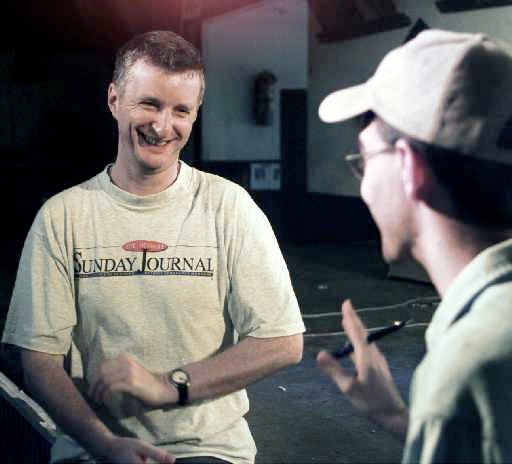
 RSS Feed